Cultural appropriation is unfortunately nothing new to the K-pop industry. From traces of Black hairstyles found in K-pop acts here and there to the superficial wearing of traditional garments, K-pop’s globalized nature makes it prone to more and more instances in which cultural aesthetics are utilized for profitable purposes, making idols prone to more and more criticisms by international fans.
Unfortunately, cultural appropriation itself has been around since even earlier, as exemplified in “yayaya” by T-ARA (released in 2013), which features the members partaking in stereotypical portrayals of Native American culture and practices such as war cries.
The comments below the YouTube video unsurprisingly have people (Native American and otherwise) taking sides as to how they feel about the portrayal of the Native American caricature in the video.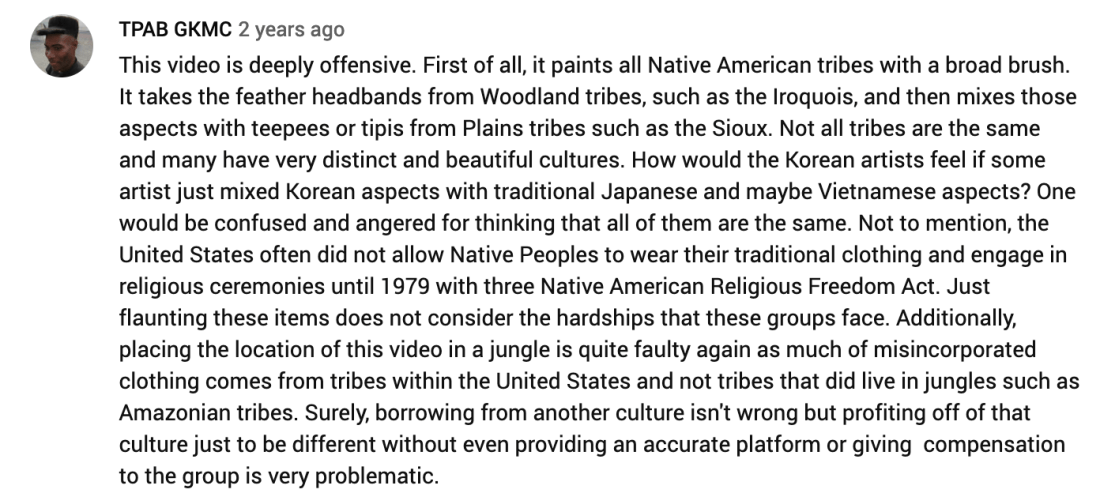
Certain viewers mention how the accuracy of these portrayals are painted in broad strokes (one commentator mentions that T-ARA are taking feather headbands from Woodland tribes but also incorporating teepees/tipis from Plains tribes) while other expressed a level of gratitude for the video showcasing the continuing existence of Native American culture, with one viewer suggesting, “maybe we could have a [Native-American] kpop [sic] star.”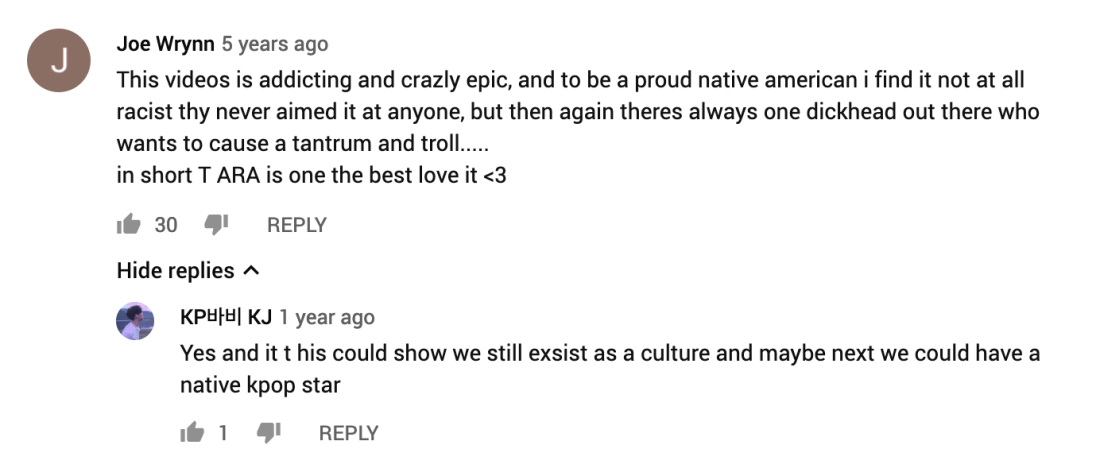
This is the issue with the cultural appropriation vs. cultural appreciation debate that Pham points out: the term “cultural appreciation” itself prioritizes the “feelings” or “good intentions”. It is because there is so much emphasis placed on how viewers “feel” about these certain portrayals — whether they find it either amusing or offensive — that these debates often fizzle out into nothingness as nothing more than a “let’s agree to disagree” situation, which is why Pham asserts that we move on to calling this sort of practice “racial plagiarism.”
What Pham interestingly points out is that “racial plagiarism” involves the process in which “racialized groups’ resources of knowledge, labor, and cultural heritage are exploited for the benefit of dominant groups and in ways that maintain dominant socioeconomic relationships,” with “dominant groups” primarily related to White people. I wonder where Koreans fit into this equation: are they still considered to be part of the dominant groups which render these actions as “racial plagiarism” or does their status of being an ethnic minority give them some degree of leniency? Where does South Korea, a country so often situated outside of these conversations on racial inequality in America, fit into with these power dynamics that are also apparent in Western civilization in its entirety as well?

 The Politics of K-Pop