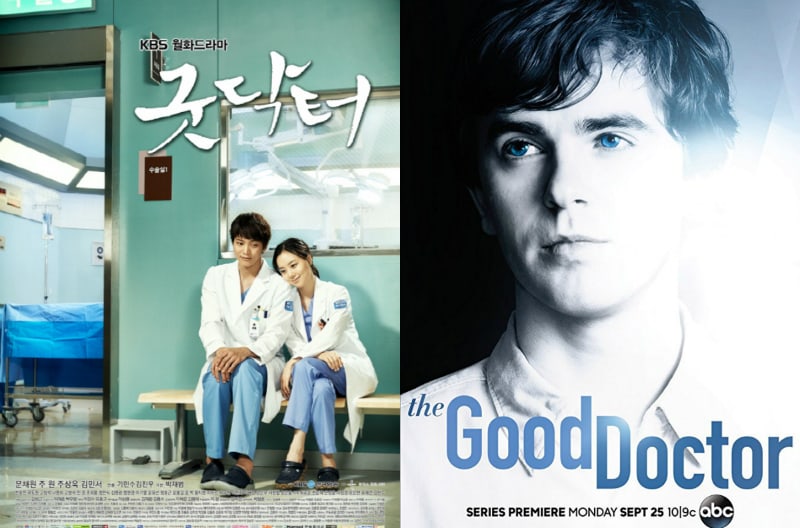
As a country that was and continues to be influenced by the legacies of American imperialism, Korea is often perceived as being a copycat, a country that lacks creativity and struggles to preserve a sense of “authenticity” within its culture. Korean film and other media content are becoming a global phenomenon, capturing audiences across vast transnational spheres. The Korean film industry has become more increasingly lucrative and has capitalized on broadcasting and licensing its content to various foreign markets, in which a growing number of foreign film industries are betting on remakes of popular Korean movies. Whether it’s the Bollywood version of the Korean movie ‘Montage’ or the American remake of the drama series ‘The Good Doctor’, it goes without saying that the booming success of Korean film and media has further galvanized the diffusion of its soft power through the prism of culture and cultural goods. However, there is still much debate surrounding whether or not Korea in part owes that success to Hollywood and the blueprints it has laid out for the world to revere and reproduce. In order to fully understand the undercurrents of this New Korean Cinema phenomenon, one must first and foremost trace its history back to colonial periods.
Michael Robinson contextualizes the shift that we are seeing within the culture industries from a country once overtly controlled by the state to one that has embraced a more liberal democracy. Cultural production and its themes were often centered around the struggle of defining and preserving a Korean identity in the face of colonialism and cultural domination from Japan and the US. There was censorship, restrictions and repressive state control that inhibited the flow of imagination. And then, through the gradual democratization of ideologies and subsequent structural transformation, freedom of expression especially in the arts became unprecedented, allowing creators to brazenly produce films with politically charged meanings.
The desire to consume and emulate American culture as well as the abiding bitterness towards the violence imposed by US military presence in Korea combine to create a dual sentiment that highlights the complex relationship and history that the country has undergone. Bong Joon Ho’s film “The Host”, according to Christina Klein, grapples with this very tension. The presence of American military in Korea came as a double-edged sword. On the one hand, Americans used their cultural products as a means to spread and sustain their hegemonic power, but on the other, it gave rise to Korean cinema by opening doors for aspiring creators via the Armed Forces Korea Network-TV, and hybridize their storytelling with widespread blockbuster trends. Okja, which was also produced and directed by Bong Joon Ho, also seemingly echoes this sentiment. The film is a critique of neoliberalism and touches on other themes such as coming of age. The movie was relatively successful, but more importantly, it highlighted a new and hybrid intercontinental production phenomenon.

We are constantly critiqued and analyzed through the lens of the West, where the benchmark for success or failure is contingent upon what is stipulated by the West. This ultimately both overtly and covertly reinforces our subaltern identity, but the relatively recent success of New Korean Cinema might be demonstrating a form of resistance and adaptability to this narrative. Korean filmmakers are making a conscious effort to narrate the stories of a people whose livelihoods were once dictated by colonialists but in ways that also cater to a shifting transnational climate. Korean cinema has substance and its growing reverence proves that we are not simply a beneficiary of American culture and production, but a producer of culture in our own right.

 The Politics of K-Pop