Plastic surgery, whitening skin creams, and intense crash diets are at the core of South Korean beauty standards. Normalized to an extent where procedures like injections of artificial nose/lip fillers cost less than a month’s worth of groceries, altering your physical appearance is almost a requirement to be “beautiful.”
Growing up partially in Korea and the U.S., it became difficult to figure out which beauty standards I, a) should follow b) liked. The drastically different trends of beauty are most apparent in aspects like makeup, where even what color foundation you’re expected to use differs.
I’m constantly told by my parents that “if you got a nose job you’d be so much prettier!” When I was in high school, it seemed like a crazy idea that I could never get behind. Maybe it’s because of the continuity of these comments that I’ve been subconsciously pressured into feeling like I need to criticize every single aspect of my facial features, but now, it’s something that I’ve been considering.
But why are South Koreans so enthusiastic about resorting to such drastic measures in order to feel beautiful? In a photography series created by South Korean photographer Ji Yeo, Yeo captured several South Koreans immediately post-plastic surgery. Offering them companionship, she interviewed these people to try and understand what it was that made them want to alter their appearance so much they felt like putting themselves through the intense healing process that follows cosmetic procedures.
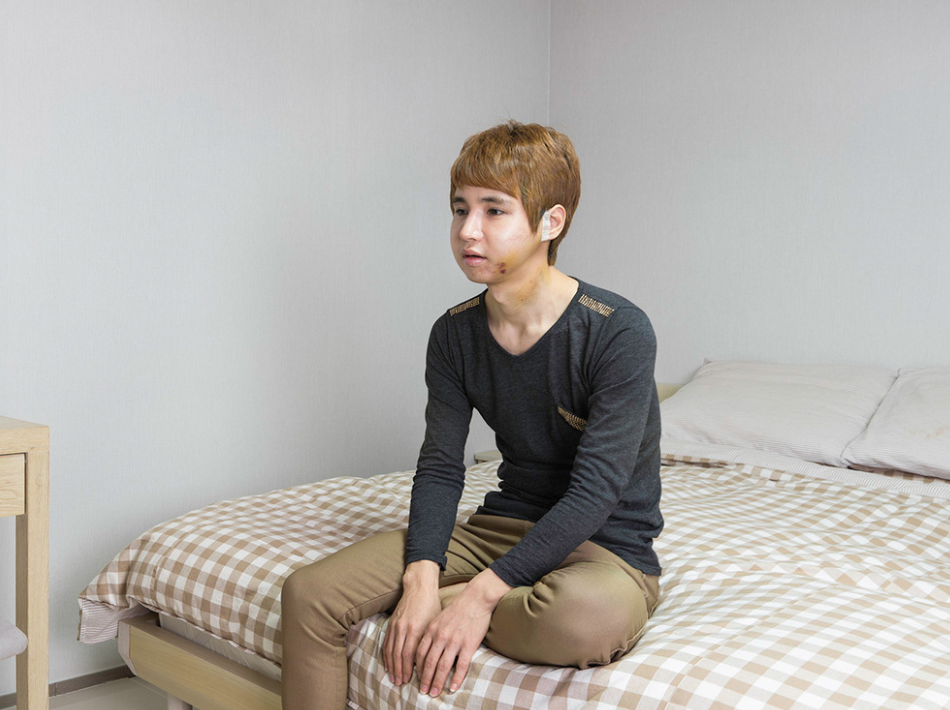
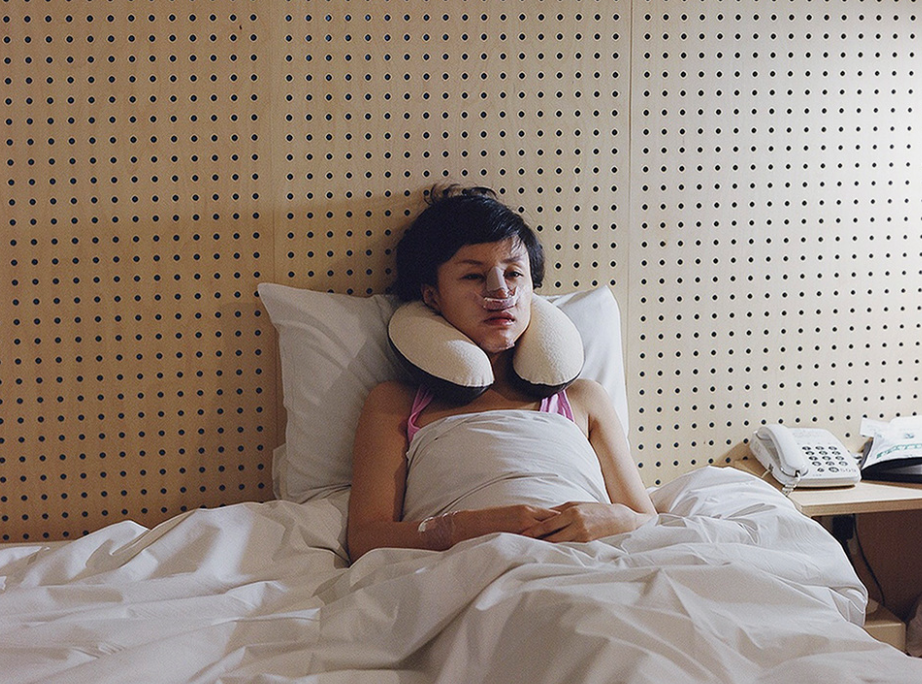
Their responses were generally that the normalization of plastic surgery makes it seem like an easy way to soothe their insecurities about their appearances. Considering the disregard for the physical pain of surgery that these patients have because of the appeal that the final result of feeling prettier fosters, it made me wonder, could this be some form of self-harm? Putting oneself through intense physical pain, in order to feel better, to cope with some insecurity, is the basis of self-harm. As someone who struggled with and continues to struggle with it, I can’t help but equate such intense procedures with this concept.
When someone is so consumed by a feeling of self-hatred or dissatisfied with a situation, they often look to harming themselves without regard to the physical pain they feel. It’s because the physical pain replaces the emotional pain, something that many are willing to trade off. Cutting or burning, two of the most common methods of self-harm, result in scars. Semi to permanent scars that are reminders of the emotions you felt/feel, ones that often trigger you to do it again.
Could placing yourself in a situation where you have an alteration of your physical appearance in order to feel better about yourself, alterations that often feel addictive and entice people to want more surgery, be something like self-harm?
 The Politics of K-Pop