Military involvement had been a common cause of many issues in Korea such as prostitution and children in the streets of Korea during the 1950’s. The stigmas in Korea against mixed-race Korean kids was the main reason the children were sent away to be adopted or live in foster care in the West. Men were prioritized in sustaining from adoption throughout this process in the early 1950’s . In Eleana J. Kim’s article “Producing Missing Persons: Korean Adoptee Artists Imagining,” Kim mentions the Korean boys adopted into Western families joining communities to find identification which shows the importance of the internet and how the media can help find individualism and identification with their lost community.
An example of the struggle of self identification would be the successful Olympic skier, Toby Dawson. In class we watched a news story about his trip back to his home country after having a victory at the Olympics in 2006. When South Korea heard of his success and that he identified as Korean-American, they took initiative to find his birth parents in Korea and invite him to their country. He was relieved and emotional to finally be able to return to “home” and be accepted. He talked about how his mother was possibly treated and how he was treated for not being a pure race Korean.
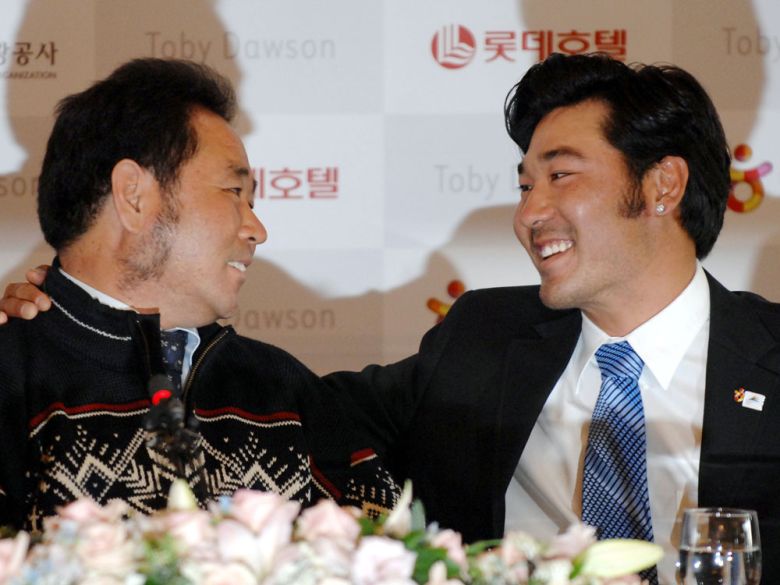
Social belonging is a huge issue among mixed race children. For example you hear of mixed black children being too “white” for their black peers, and too “Black” for their white peers causing a dissociated interaction throughout their growing and educational years. Same can be said for Korean mixed-Race children and feeling a sense of not belonging.
The “emergence of the adult adoptee subculture” became a product of the social isolation of these adopted mixed-raced Korean’s which turned into a great community for other adults trying to find themselves among their culture. From these adoptee subcultures they started participating in “community and the global art world” (KIM 77). This formed a community trying to help with the cultural displacement of the adult adoptees. Mostly photography and movies are made to give a valid and surreal representation of the life of an adopted child growing up in the West which gives them “greater self understanding” (Kim 78). KIM also mentions in her article that the adoptee artwork is a form of activism and brings cultural awareness to surrounding peers in their communities or outside of their communities. It could be analyzed and claimed that Toby Dawsons art contribution to this community would be his career in skiing and his interaction with his family that came from his growing fame as an athlete.
 The Politics of K-Pop