Have You Ever Thought About a Nose Job?

Plastic surgery, whitening skin creams, and intense crash diets are at the core of South Korean beauty standards. Normalized to an extent where procedures like injections of artificial nose/lip fillers cost less than a month’s worth of groceries, altering your physical appearance is almost a requirement to be “beautiful.”

Growing up partially in Korea and the U.S., it became difficult to figure out which beauty standards I, a) should follow b) liked. The drastically different trends of beauty are most apparent in aspects like makeup, where even what color foundation you’re expected to use differs.

I’m constantly told by my parents that “if you got a nose job you’d be so much prettier!” When I was in high school, it seemed like a crazy idea that I could never get behind. Maybe it’s because of the continuity of these comments that I’ve been subconsciously pressured into feeling like I need to criticize every single aspect of my facial features, but now, it’s something that I’ve been considering.

But why are South Koreans so enthusiastic about resorting to such drastic measures in order to feel beautiful? In a photography series created by South Korean photographer Ji Yeo, Yeo captured several South Koreans immediately post-plastic surgery. Offering them companionship, she interviewed these people to try and understand what it was that made them want to alter their appearance so much they felt like putting themselves through the intense healing process that follows cosmetic procedures.
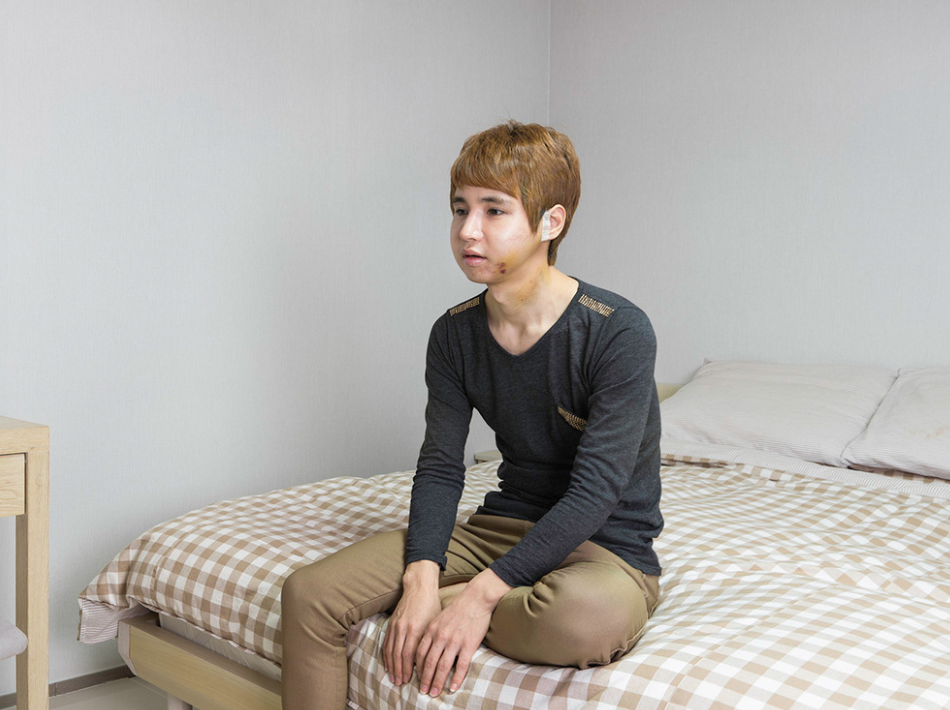
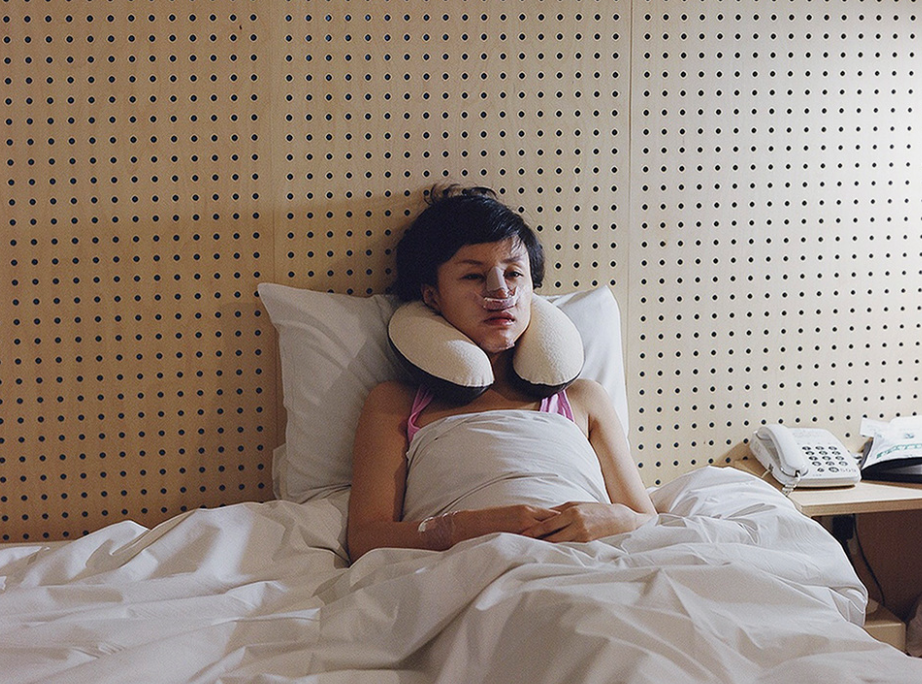
Their responses were generally that the normalization of plastic surgery makes it seem like an easy way to soothe their insecurities about their appearances. Considering the disregard for the physical pain of surgery that these patients have because of the appeal that the final result of feeling prettier fosters, it made me wonder, could this be some form of self-harm? Putting oneself through intense physical pain, in order to feel better, to cope with some insecurity, is the basis of self-harm. As someone who struggled with and continues to struggle with it, I can’t help but equate such intense procedures with this concept.

When someone is so consumed by a feeling of self-hatred or dissatisfied with a situation, they often look to harming themselves without regard to the physical pain they feel. It’s because the physical pain replaces the emotional pain, something that many are willing to trade off. Cutting or burning, two of the most common methods of self-harm, result in scars. Semi to permanent scars that are reminders of the emotions you felt/feel, ones that often trigger you to do it again.

Could placing yourself in a situation where you have an alteration of your physical appearance in order to feel better about yourself, alterations that often feel addictive and entice people to want more surgery, be something like self-harm?

Experiencing Soft Masculinity in Thailand

By Stephanie Yang

Dredge Kang, in “The Softening of Butches: The Adoption of Korean “Soft” Masculinity among Thai Toms”, discusses the evolution of queer culture in Thailand through his focus on Thai toms. Kang also investigates how the rise of soft masculinity, as exemplified by Korean flowerboys and gender-bending tropes in K-media, has led to a flourishing and growing production of queer cultural products in Thailand and “queered effeminacies” in the country. Kang coins the term Asian Regionalism to explain how Thailand is both consumer and producer, “increasingly recognized for its role in “inter” (international) queer popular culture areas such as film and music,” (Kang 23). I experienced these new “queered effeminacies” and the manifestation of such “cutesy boy” representations on my first trip to Thailand this winter break.

For the very first time, I got to meet my distant cousins who lived their entire lives in Thailand. While my cousins and I share great-grandparents, we seemed to lead extremely different lives. Leading up to the actual trip, my mom’s sister, Chinese, was explaining to me what my cousins were like. She said men in Thailand are very girly, and that my male cousins were no exception. While I was skeptical at what seemed to be ignorant comments in my head, I kept an open mind and hopped on the plane to Thailand not thinking much of her description of my cousins.

My first stop in Thailand was a small city called Khon Kaen, where I met my two cousins, brothers. Popo is a recently-married trauma surgeon, and Yong works at an exotic zoo, both in their twenties. At dinner, I couldn’t help but notice their somewhat “cute” mannerisms, towards even their much older father, as well as their high-pitched voices. Interestingly, Popo’s middle name on Facebook is “Kittycat”, a cute nickname that one would never see from a straight, married trauma surgeon in the United States. While both my male cousins are heterosexual, they exuded a “soft masculinity” through their mannerisms and behavior I saw so rarely in the United States from straight Asian men.

After meeting Popo and Yong, I headed to Bangkok to meet another set of relatives for the first time. During my stay with my cousins, two males and one female in their twenties and thirties, another difference stuck out to me: their morning routines. Both my male cousins and my female cousin took almost an hour to get ready before work, applying different creams, powders, and cosmetics to their faces–many of them Korean brands or K-beauty knockoffs.

My experience meeting my Thai cousins makes it clear that soft masculinity manifests so differently from person to person. My cousins in Khon Kaen do not wear makeup or use beauty products, but act “cute” through physical gestures and language. On the other hand, my male cousins in Bangkok diligently apply layers of makeup every morning, but show no attempt to act cute or feminine in how they behave.

By reading Kang’s article on the convergence of heterosexual soft masculinity and Thai tom culture, I can better understand why male cousins choose to don makeup every morning, or act like “cutesy boys” in-person and online. Whether my cousins believe that Thai women view desirable men as those embodying feminized masculine aesthetics, or just plain enjoy wearing makeup and acting more cute–makes little difference. At the end of the day, the normalization of these non-traditional masculine aesthetics demonstrates the influence of flowerboy tropes in Korean pop culture–either directly to Thai viewers of K-dramas, and indirectly to everyday Thai men who may not even consume Korean cultural products.

A Makeup Tutorial for Thai Men using K-Beauty Products

Fan culture and K-pop

In Erica Vogel’s article titled “K-pop in Mexico”, the concept of large scale fan-organized events, such as flash mobs, in different countries, specifically Mexico, is examined. Vogel explores the potential motivations behind these massive events, including being noticed by their favorite stars, or to put their country on Korea’s radar so that they may host a concert there. This form of communication between the artist and the fan is something rather unique to K-pop, perhaps because of its sheer distance and language/culture barrier. Although interaction on social media does happen, fan-organized events tend to make even more of a statement, especially if it gets covered by local news stations. The ultimate goal seems to be to close the distance between fan and idol, whether that be emotionally or literally. One aspect of fan culture that is very particular to K-pop are fan projects that fans organize at concerts.

Fan project at a BTS concert, where lightsticks were coordinated to spell out a message

Fanclubs will coordinate with their favourite celebrities’ company, the concert venue, and other fans in order to put on a special display of devotion and affection for their idols, usually in the middle of a concert. These projects can come in the form of a fan-made video, coordination of lightsticks to spell out a message, organized chanting, and more. All this is usually done without expectation of any sort of tangible return or compensation, just for an emotional connection to or the recognition of their idol. This sort of fan-idol communication often transcends language, especially as Hallyu becomes more and more of a global trend. One important point that Vogel brings up is how these fan-projects, especially the ones organized by international fans, creates communities and niches within larger cultural groups It takes an exraordinary amount of time and effort for fan projects to take place, and the connection between K-pop fans across gender, race, age, etc.

Girl’s Generation received a black ocean in 2008

However, this dedication can also be seen in antifans’ wrath. For their idols, an arena of fans might coordinate their lightsticks to spell out a huge message of love and support, but antifans of that group can coordinate large scale events such as a “black ocean”, where all lightsticks are turned off, to show the performing artiat a malicious lack of support. Overall, fan-idol communication in K-pop seems to be on a much larger scale than in the western entertainment industry. Rather than striving to communicate with a celebrity one on one, K-pop fans seems to believe that coordinating a larger scale of communication with other fans is a more ideal mode. Whether this is due to language and cultural barriers or other reasons, I think it is interesting to consider the dynamic between fan and idol in Korean pop culture. The highly organized nature of fan culture in Hallyu suggests that fans feel not only an obligation to their favorite idols, but also an obligation to other fans. All in all, it reflects a level of dedication and cooperation that is frankly uncommon in western pop culture.

THAAD’s Effects on K-Pop

In “K-Pop in Mexico: “Flash Mobs, Media Stunts, and the Momentum of Global Mutual Recognition,” Erica Vogel examines the cultural exchange between South Korea and Mexico through music and how fans, especially K-Pop fans, act as both producers and consumers along with being self-promoters of the genre.

Through this, you can see how Korea and K-Pop began to focus more intensely on other markets besides China after the strain the Terminal High Altitude Area Defense (THAAD) system caused on their relationship. THAAD is an American anti-ballistic missile defense system used to shoot down incoming missiles. In October 2013, the South Korean military asked the Pentagon to provide information on about THAAD in hopes to strengthen defenses against North Korean ballistic missiles. Controversy began as Chinese officials were convinced THAAD was actually meant to track missiles launched from China rather than North Korea. With these political tensions, Korean companies were seeing a strain on their relationship with their Chinese financiers. Even Chinese members of K-Pop groups face pressure as Zhang Yixing, better known as Lay, of EXO has not promoted with the group in recent years, and WayV, NCT’s Chinese subunit, is under a different label in China, not S.M. Entertainment, and cannot use the NCT name.

This led the South Korean music industry to turn their focus to other markets, such as Mexico. There has been a recent surge in K-Pop songs having Spanish lyrics or being Latin inspired. We see this in songs like KARD’s “Hola Hola” and even BTS’ “Airplane pt. 2,” which was co-written by Ali Tamposi, the songwriter for Camila Cabello’s hit “Havana.” Super Junior’s “Lo Siento” even features Leslie Grace, a Dominican-American artist, who expressed in an article for Forbes that “We’re setting the bar for cross-cultural collaborations, which is something that has never been [done] in this realm and that is huge. So it’s just been fulfilling to see that, at the end of the day, people connect to good music no matter what a good song in that way is really, really, really, really cool.”

Soompi, a popular website that covers Korean pop culture in English, now has a Spanish site as well, and now stops in Mexico and Latin America regularly appear on tour dates for K-Pop acts. Just recently, in January of this year, S.M. Entertainment held an SMTown “Special Stage” in Santiago, Chile as the agency’s first flagship event in South America, featuring a large number of artists under the label.

K-Pop’s penetration into Latin American industries only works because the fans have become their promoters, their greatest advertisement. Vogel discusses ways in which fans play a role in K-Pop’s global recognition, such as fan clubs and dance cover groups.

The power dynamics between South Korea and Mexico

The first time I learned about K-pop was in 2011. I was introduced to 2NE1’s ‘Hate You’ via YouTube. I thought the animations were cool and all, but I wasn’t that interested in it. Years later, I became curious about 2NE1 again and by then CL had done some solo projects. Again, I enjoyed the songs and music videos but there was something missing that didn’t make me believe fully in the power of K-pop.

Until 2016, when while scrolling through Facebook, I saw someone had re-posted a video of EXO-K performing a cover of ‘Sabor a Mi’ live in Mexico.

Let me break down my reaction process for you: 1) ‘Koreans singing in Spanish?!?!” 2) Koreans singing in Spanish in Mexico!?!??! 3) Koreans know of Mexican classics!??!

It was surreal. And like Erica Vogel suggests in her findings from her fieldwork exploring K-pop fandoms in Mexico City, it was realizing that a Korean group recognized Mexico and their cultural products enough to honor them with this special performance. It was understanding that there was a large enough audience of fans in Mexico for them to take the time to practice the pronunciation of the lyrics (which was, indeed, phenomenal). It was hearing the euphoria of Mexican fans when they recognized a familiar sound projected by idols that came from so far away.

And why did I care about Mexicans getting recognized by K-pop acts when I’m not even Mexican myself? Because it gave me hope that if they presented an interest in singing in Spanish, then they might become interested in other countries and cultures nearby. It mattered because I grew up listening to this song too (the version by Luis Miguel) and I felt connected to Korea via Mexico.

It was also, as Vogel put is, the idea of feeling worthy of their acknowledgement.   

Key word: worthy. If Mexican fans (and fans from other places outside of Korea) must act and behave in a certain way to earn the attention of not just their favorite idols, but from Korean entertainment companies to “send more groups,” then there’s a clear hierarchy at play. As Vogel elaborates, competitions arise among fandoms from other countries close to Mexico to prove which is more devoted, worthy and organized (e.g. Mexico vs Peru or Mexico vs U.S.).  These power dynamics between South Korea and Mexico, then, become manifested through these devoted fans who participate in unpaid labor to promote Hallyu and satisfy the South Korean government’s agenda — all for the possibility of having fleeting (online) interactions with their idols at most.

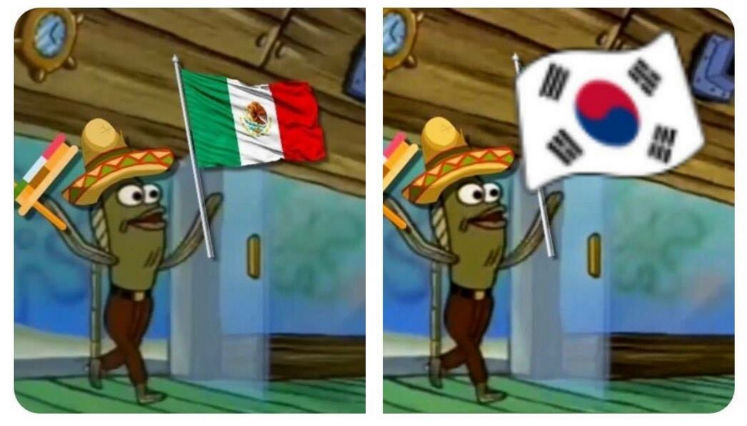
Highly circulated meme after a South Korea win secures Mexico’s place 2018 World Cup Knockout games.
A moment in history. Best time to be on Twitter.

As the South Korean government continues to acknowledge their flash mobs and “good Mexican behavior,” there more Mexican youth (and, again, other K-pop fans in places throughout Latin America and the world) become engulfed by the cross-cultural Korean entertainment empire that’s been slowly creeping up under our noses.

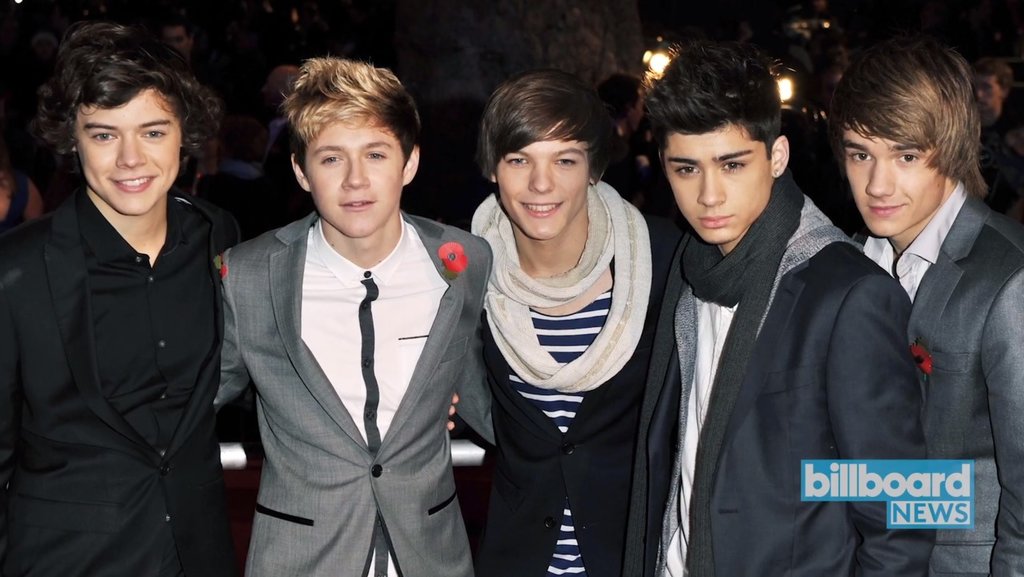
not to relate everything back to one direction, but…

In Erica Vogel’s ethnographic work studying K-pop fandoms in Mexico City, she uncovers the main reason there is such a strong fanbase there: community. While a major incentive for Mexican K-pop fans in performing so much unpaid, affective labor is the media and global recognition, as well as the potential reward from the Korean culture industry, the first and most important reason Vogel finds these fans entering K-pop spaces is for local community.

Vogel writes that local imagined community helps “mitigate feelings of anonymity in an increasing globalizing world” and increasing globalized culture industry (Vogel, 58). K-pop, essentially, makes these people feel less alone on both a local scale and a global scale. Through working with their fellow local fans, they reaffirm their sense of significance in relation to other countries (Peru and the US, for example, which also have massive K-pop fandom communities) and in relation to their own lives.

Vogel goes on to say that “perhaps the most important thing the K-pop machine gave Mexican fans was the ability to find each other…to find a local group where they belonged.” (Vogel, 66-7). K-pop she argues has become the great equalizer for Mexican communities – when you find K-pop, you find instant community, and discovering that community becomes more important than discovering Korea.

Not to relate everything I learn about in this class back to my experience in the One Direction fandom (because as a newbie to K-pop, this is really all I have to go off on, and this is what I’m doing my final project about), but a lot of what Vogel was writing about in relation to community really resonated with me. I was severely bullied all throughout middle school and early high school, so my 1D fandom was an escape.

Yeah the boys were hot and I loved their music (Steal My Girl SLAPS and you can’t deny it), but I still consistently talk to and meet up with people I befriended online in that fandom and in real life. When I moved to a different city at the start of my sophomore year of high school, I made my first friend because I found out she also loved One Direction. When she told me, I literally started crying because I finally (a week into going to that school) found someone that would talk to me for hours on end and not let me sit alone at lunch because of that common interest. Wow, this is getting really sad, sorry.

Anyways, community was the driving force behind going online to scroll through my 1D Tumblr feed all day after school – I couldn’t wait to see what my friends were posting, what fanfictions they were reading or writing, I couldn’t wait to fangirl about 1D with them. It was a community experience at heart, sealed together because of our shared love of a dumb boy band who all had bad tattoos and horrible, everchanging hairdos (see below).

Ultimately, what Vogel is speaking on is not unique to Mexico. She is discussing affective notions of belonging, acceptance, and love that are almost guaranteed upon signing up for those social media spheres (tumblr, twitter) or in person experiences (dance groups, flash mobs, concerts, etc.).

image

#TBT

Pachinko and a “not-so glamorous” destiny

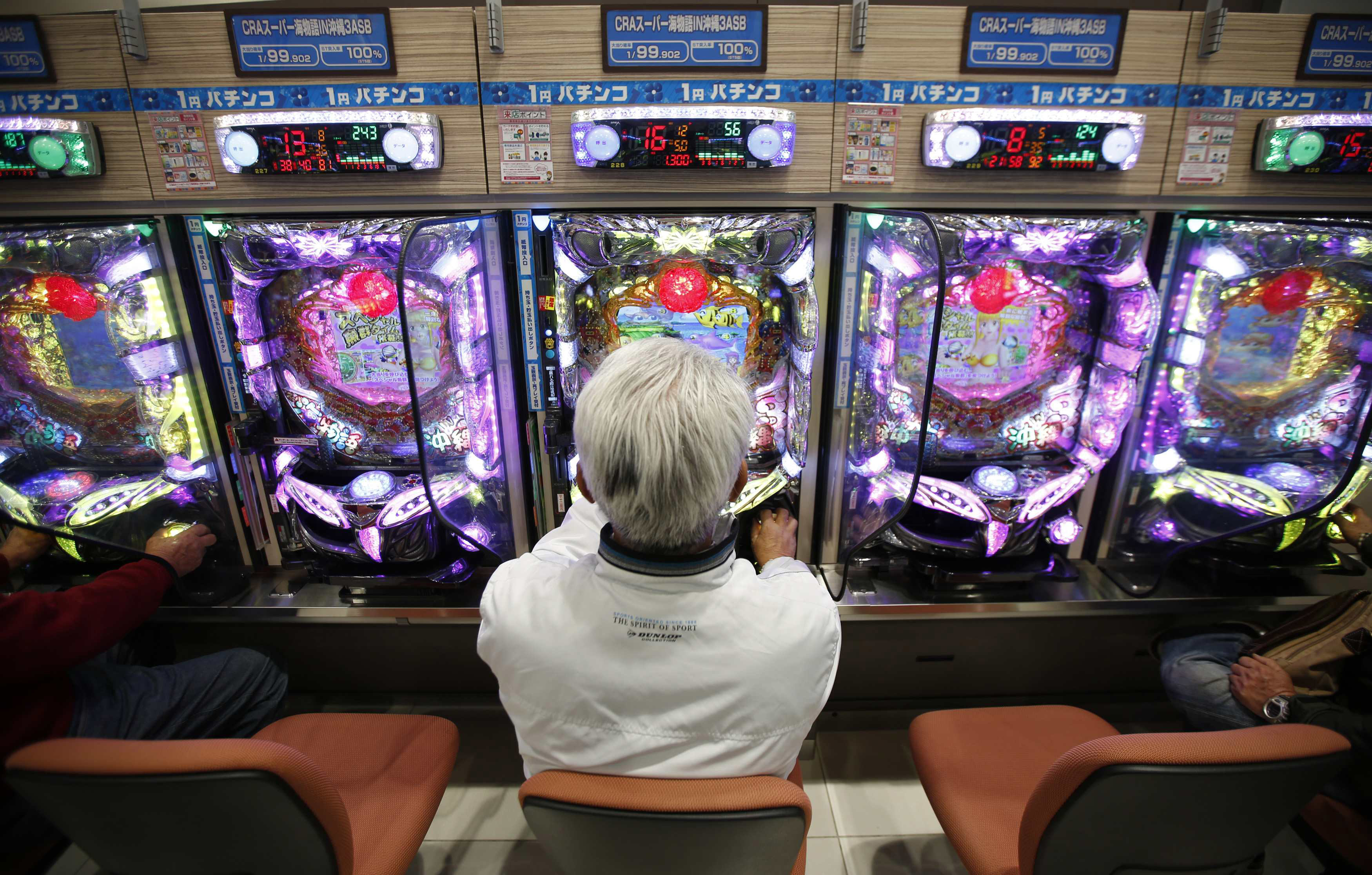
As I read Hye Seung Chung’s “Hating the Korean Wave in Japan: The Exclusivist Inclusion of Zainichi Koreans in Nerima Daikon Brother,” I was reminded of a book I read last semester called Pachinko. It’s about generations of a Korean family living in Japan during the Japanese invasions in Korea. Subject to discrimination, the family must work double, even triple as hard to survive in a prejudiced society while maintaining very traditional Korean family values. As the novel extends across several decades, those in the latter generations tend to adopt more Japanese mannerisms. For example, Noa wants to change his name to Japanese because he rejects his heritage. When his mother begins to sell kimchi to cope with financial struggles, Noa feels ashamed because of its pungent smell, so the kids at his school bully him. Living as a Zainichi, Noa is torn between his lacking allegiance to both Korea and Japan. While the Japanese looked down on the Koreans and coined the term “Zainichi” as derogatory, the Koreans disliked the Zainichis as well because they were seen as traitors. Having no real home, Noa tried to climb the social ladder in Japan by becoming more “Japanese,” but his eventual return to his family’s Pachinko business reveals that fate ties him down to his roots, despite his attempts to evade it. This can be compared to the Pachinko game itself, as flicking the ball is a symbol of a predetermined trajectory of one’s life since birth.

Pachinko is a popular form of gambling in Japan.

A pachinko parlor was typically the only way Koreans were somewhat accepted in Japanese society. However, with the rise of Hallyu, Koreans can find better social mobility and less prejudices due to the reflections of male leads in K-drama on Japanese consumers. The shift in attitude the Japanese public experienced due to Bae Yong Joon’s depiction of soft masculinity in Winter Sonata demonstrates the power of the media.

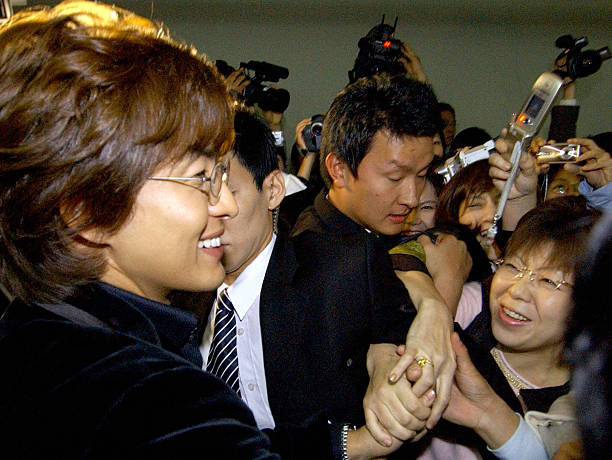
However, drawing correlations with Bae Yong Joon’s character and the average Korean creates a discourse on the growing expectations and even idolizing of Korean people. Winter Sonata caused Japanese women to fantasize Korean men as being soft and charming, and their desire to find someone like that pushes them to their limits. That can mean physical altercations to get a better view of one’s idol, or, today, the rise of sasaeng fans.

Japanese fans touching their idol :’)

Sasaeng fans are those who have an unhealthy obsession with an idol member or group, and they either stalk their idol or pay large sums of money to encourage such illegal behavior. As I watched Michelle Moe’s YouTube video about her interview with an ex-sasaeng fan of BTS, I realized how complex and time-consuming being a sasaeng was. I got the chills when the fan said sasaeng fans were the happiest when they were in the same plane as BTS, because the idol group had no way to escape. After a BTS member used the restroom, some fans would go inside and spend an extended amount of time doing who-knows-what. Also, some sasaeng fans are extremely wealthy, and they have the time and money to go on first-class flights with their idol, or spend obscene amounts on a private picture. These fans are committing illegal acts, and they should be restricted from idols.

With the rise of Hallyu, Koreans are being accepted into Japanese society despite historical tensions. However, as some fans become too drawn to their idols, they can inflict harm through unhealthy obsessions and fantasies about K-pop stars.

“Korean-ness” as a Feature

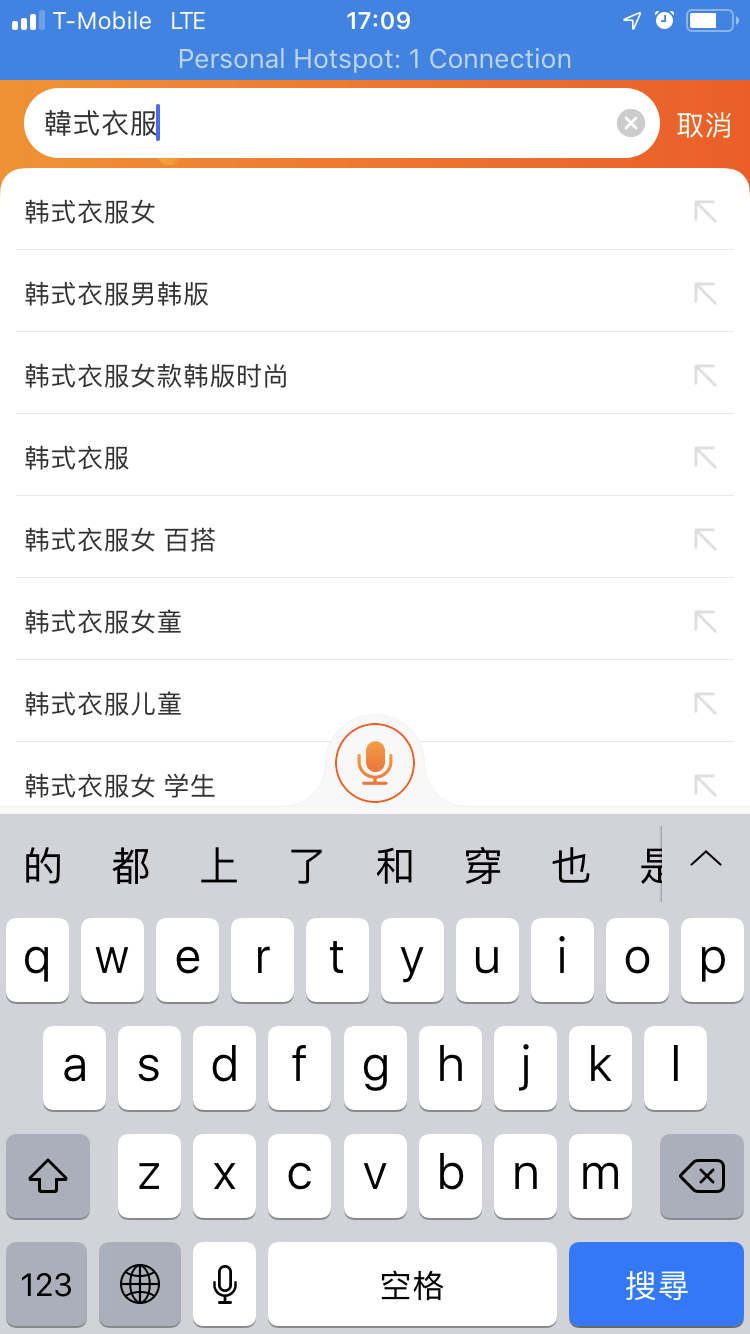
In addition to Japan, Latin America, and South East Asia being on the receiving end of Hallyu’s influence, another notable country that has had popular culture change is Mainland China. Most of my experience with Hallyu in Mainland China is anecdotal and limited to Shanghai, but I believe that Hallyu has had some strong influence in other parts of the country. One of the ways that Hallyu has manifested in Mainland China is the use of “Korean-ness” as a brand. This can be seen on a search on Taobao, a popular shopping site in China. I’ve been told by friends that when shopping for clothes on Taobao, that a search for “韓式衣服”, or Korean-style clothes, is the best way to find fashionable clothing.

A plethora of suggestions on Taobao for Korean-style clothes

Although I’m not sure if these clothes are actually reflective of current fashion trends within Korea, the popularity of branding as Korean shows in real life, as much of the clothing results I’ve been able to find on Taobao are visible when walking on the streets of Shanghai. A notable example of the supposed trend transfers from Korean to China in regards to fashion is the prominence of Canada Goose jackets. Apparently, the popularity of Canada Goose first arose within Korea and its diaspora, then transferred to China and the Chinese diaspora. Although the winter season has already come to an end, Canada Goose was able to remain popular throughout, even in light of the controversial arrest of Huawei’s (a Mainland Chinese company) CFO in Canada which brought about much negative sentiment towards Canada within Mainland China.

On top of clothing trends, much of the similar trends worldwide in regards to Hallyu also apply in China. Dramas, TV shows, films, and Kpop, in general, are popular among younger Mainland Chinese people, despite the government’s opposition to Korean and foreign media in general. With a growing middle-class and increased interest in Korean media, Hallyu has also led to an increase in Chinese nationals travelling to Korea. In addition to its reputation of fashion and media, Korea is also recognised as a leader in cosmetics, with many local brands using names and Hanguel in an attempt to be perceived as Korean.

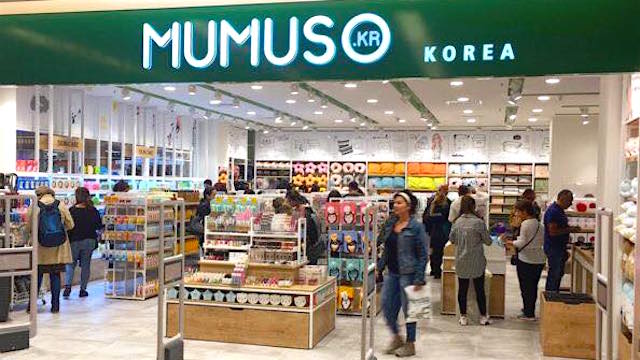
A typical MUMUSO store

A notable example of this is the “MUMUSO” chain. (I believe that MUMUSO is a copy with Korean branding of the other Chinese chain Miniso, which is based on some hybrid between Daiso and MUJI?) MUMUSO is similar to Daiso where one can find everyday household items as well as cosmetics. Notably, MUMUSO typically brands itself as MUMUSO Korea with a website that ends in “.co.kr” to lend itself even more “legitimacy” as a Korean company and features goods covered in Hangeul labelling. The company, however, is based within China and I’ve been told by my Korean friends that the labels are non-sensical. I raise MUMUSO as an example of how lucrative “Korean branding” has become within Mainland China which, I believe is reflective of Hallyu’s impact in the region.

American Versus Korean Requirements For Entering

Shin and Kim’s article, “Birth, Death, and Resurrection of Group Sound Rock” vastly helps comprehend the ties that connect Korean pop culture to the U.S. military system and the influence the latter established on the former. There is this continuous cycle of back-and-forth, giving and taking between American and Korean systems, which makes me raise questions about contribution and hybridity between the two nations. The geographical roots of Korean rock music is complex. The U.S. military authorities held constant control over Korean musicians, with them even being the final deciders of talent to be deemed worthy (277). This made me think of what Dr. Anderson talked about during our in-class video chat: that when Korean artists go abroad to perform, they need to hone various new skills to be accepted into the American culture sphere, whereas Beyonce, for instance, would never have to put in even a partial of that effort when performing in Asian spaces. This makes me think, even though there is this cycle of America needing Korean-ness to expand their culture to make it more multifaceted and Korea needing Americanness to globalize theirs, why is it that America demands much higher requirements for Korean-ness to enter? As Shin and Kim state, “musical versatility was crucial to the survival of a band playing U.S. military clubs (277).” There’s this need to reform and almost alter for the benefit of the U.S. How is it not the other way around as well, given America too needs the Korean-ness — or has that neediness only sprouted in the current day? Additionally, there was increased cramming to learn hits of the American pop charts: “The  level of competition among the musicians to enter and stay on the camp show circuit was very high (277).” This to me is somewhat hypocritical on the part of Americans because they tend to often create stereotypes deeming Asians as being robotic, whereas it’s these very American spaces (such as the camp shows) that require memorization and extreme competitiveness in order for Koreans to be deemed worthy.

The controlling of the youth was also something I found interesting in this piece. Once the authoritarian Park Chung-Hee regime took control and deemed the “youth culture” as “vulgar,” the regime seemed to have mimicked military regulations: “Men got a free haircut on the spot if their hair was deemed too long. Women’s skirts had to be long enough to cover their knees” (282). This discipline of the body is very much a militarized form of regulation so the influences are almost too obvious. With the survival of decadence, “the go-go revolt was a warning sign that the heavy-handed cultural oppression would eventually backfire” (284). That is similar to Korean pop today and more recently. The bans on censored content and pop were all lifted after Psy’s “Gangnam Style”. The only difference, however, was that that may have come about from a transnational demand rather than a Korean revolt. Hence, going back to my previous question, why is it that American need overpowers Korean need even today (when Kpop does hold such high demand in the western sphere today) and why are regulations for Korean entering more rigorous than American?

Racial Triangulation Leads to Racial Plagiarism

In “Transpacific Talent: The Kim Sisters in Cold War America,” Benjamin M. Han, an Assistant Professor in the Department of Communication at Tulane University, explores American Orientalism through the exchange of talent between the United States and Korea during the period of the Cold War. Throughout his work, Han refers to ideas such as the “perpetual foreigner” and “Americanized Asians,” along with referring to America as a “melting pot.” These concepts allow me to better understand why racial plagiarism is so prevalent within Asian entertainment both in America and in Asia.

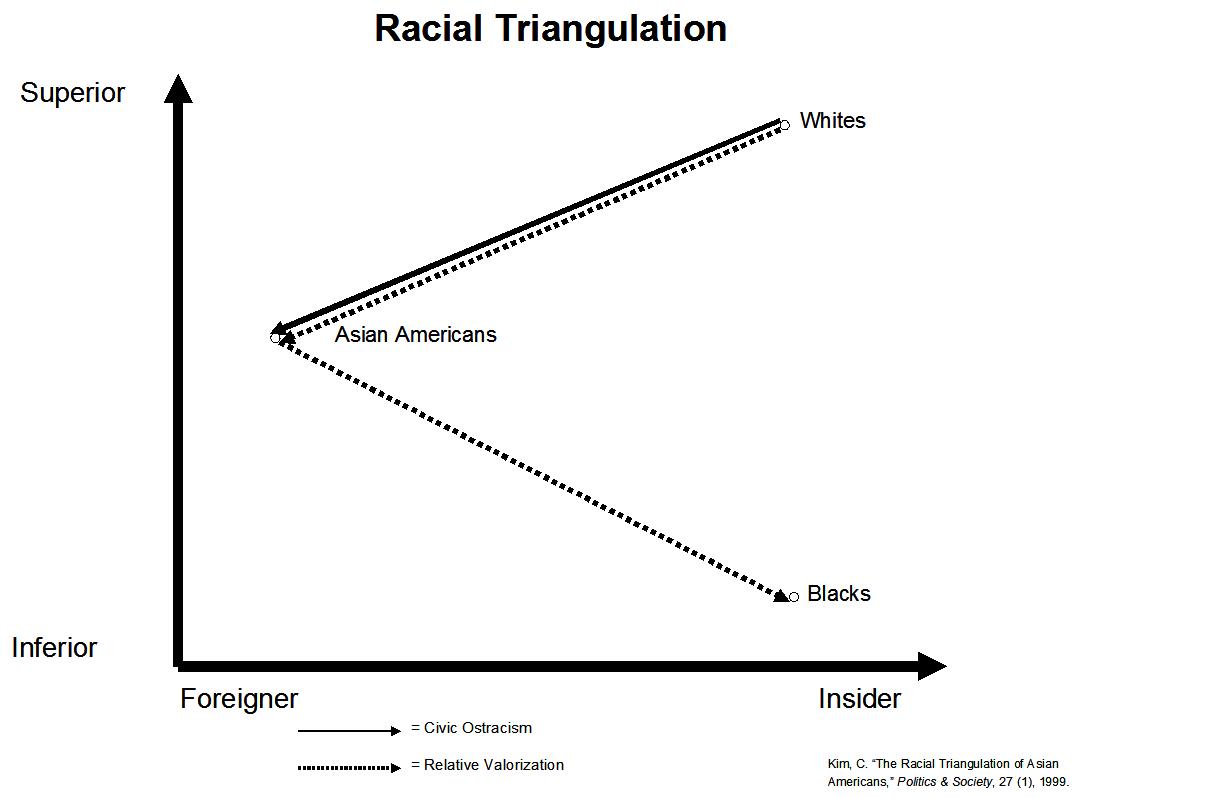
The idea of the melting pot is equivalent to assimilation. The metaphor implies a homogenous society, or a fusion of cultures, in which immigrants typically have to give up parts of their culture in order to fit in. On the other hand, the stereotype of Asians as the perpetual foreigner is the idea that no matter how long they or their family has been a part of American society, they will never be seen as true, genuine Americans. With this in mind, despite the systematic oppression they face, African Americans do not face this same issue of being labeled a foreigner. We see this in the theory of black, white, and Asian racial triangulation. This leads me to believe that because of the melting pot ideology and the want to dissolve the label of perpetual foreigner, Asians often racially plagiarize black culture in an attempt to do so.

We see a soar in popularity with Asian American music artists such as Brian Imanuel, better known as Rich Brian, and his record label, 88rising, which has done a remarkable job of bringing Asian artists into the mainstream. Sean Miyashiro, founder of 88rising, defines the goal of the label as “dedicated to celebrating global Asian culture.” However, black culture permeates many aspects of their work from the music and lyrics to the cinematography of the videos produced, even more so than Asian culture itself. Imanuel’s old stage name used to be Rich Chigga, and he even used the n-word in his song “Dat $tick.”

Black Artists React to Rich Brian

American rapper and actress, Nora Lum, better known as Awkwafina, donned a “blaccent” throughout her role as Peik Lin Goh in the film Crazy Rich Asians, monetizing blackness and black stereotypes to be rewarded in a way that actual black people are not. Black culture is so prevailing within Asian entertainment because by capitalizing on black culture, Asians are able to seem more like an insider and gain acceptance by the majority.