The Necessity of Beauty

In a capitalist society, someone has to teach the younger generations what beauty means. No beauty standards can stand as a universal choice. It also transcends aesthetics as it leans into the realm of race. Wall Street Journal and Oprah took the Korean plastic surgery craze as an extreme method to achieve a more Western look. This could not be more wrong. of an update of what Korean beauty has been considered. Also used as a further tool to enhance its economic goals in K-Pop. As quoted in the Lee selection, “Korean popular music is driven by the visual.” It is a way to upgrade their stars and country as a whole. What is more visually pleasing than groups and tv shows full of beautiful people?

In this video, the before and afters of several K-Pop stars are shown and they explain why they chose to do it. In many cases, it is viewed as a necessity or a form of body positivity.

As seen in the video above, men have also gone under the knife for a new look. Lots of the literature on the topic of beauty portrays the dilemma as a sexist one in which women are the ones forced to conform to these beauty standards. In history, women have been the ones held to higher standards globally, but in today’s world, especially in Korean, men are right under a magnifying glass with them. Men are putting in body work and using the technologies of beauty just as much as women in K-Pop. They are just as active consumers of beauty products from makeup to plastic surgery as women are. 


In K-Pop groups, both men and women undergo intense grooming from to forced plastic surgery contracts to even be allowed to debut on stage. Different standards are afforded to each gender, but in general both require a lot of change. In the following video, 

Video demonstrating what several male members of groups looked like before and after surgery.

Featured are members from EXO, BEAST, SuperJunior, and more. The K-Pop contract can lock in a production company’s right to the person’s voice down to having agency over their body. It says it in the world itself, “idol.” To become an idol, a person must be practically perfect for the eyes of the public. 


The process of this is well explained in last week’s readings. In the Kimberly Hoang’s article, Dealing with Desire, she refers to the act of changing herself to conform to beauty standards “bodily labor” and “body work” which will then result in “body capital” (127, 129). This is essentially part of the process of any K-Pop artist, male or female, to continue to advertise the beauty of Korean people to make Korea more appealing in everything that they do.


K-Plastic Surgery: The same, but different.

It is no secret that the plastic surgery industry in Korea is booming. K-pop stars have been serving as international advertising campaigns for various cosmetic procedures for several years now. While this new industry can be great for the Korean economy, I have some questions about its effects on the world at large.

I would just like to preface this by saying that I, personally, love plastic surgery. The second I get a salaried job, I will be getting my liquid nose job, cheek fillers, and lip fillers without a doubt. Plastic surgery is great, and can be very empowering. I just believe that we should be conscious of why we feel compelled to get these surgeries. Once we have that awareness, then I think these procedures can be very liberating and empowering for some.

For Korea, I think plastic surgery has been pretty great. Plastic surgery has allowed Korea to globalize a very “Korean” look that people all over the globe are now vying to achieve. It has created a new aesthetic identity for Korean people to feel proud of, which can be very empowering for its people. However, with the recent globalization of all things Korea, I believe this can have a negative effect on society at large. Many of these procedures were introduced to Korea in an effort to “de-orientalize” their appearance. Currently, the Korean population has been able to re-appropriate these procedures into something that almost forms a sort of cultural identity. The way that these procedures have developed to the current beauty standard within Korea is a far cry from what they originally were. However we can not ignore it’s past, and the effects that it currently has. Whether it’s purpose is to white-wash a person’s features or not, the fact of the matter is that that is precisely what it is doing. Only now, rather than being billed specifically as something that’ll make you look “whiter”, it claims it will give you this new, modern look. The marketing has changed, but those nuances are still there. And this is not only relevant for Korean women. Women from all over the world fly to Korea to get plastic surgery all the time, all pursuing this look, still pursuing those familiar white beauty standards, just in new packaging. For example, the first video I embedded shows a black woman discussing her rhinoplasty that she received in Korea. Based on my knowledge and experience, for many black people, their noses are one of those features that has become sort of a defining feature for their identity. There are dozens of other videos on YouTube of other black women flying to Korea for the same procedure. At the end of the procedure, they all leave with significantly more Caucasian noses- despite the fact that they got their surgery in Korea. Even though the Korean plastic surgery market likes to market itself as a reprieve from the white beauty standards of old, it has yet to stop actually contributing to those standards.

While white-ness might not be the “goal” any longer, there is a certain “racially ambiguous” aesthetic that is being pushed here, and that can be very dangerous. It erases the heritage of marginalized groups, and white-washes their features for the sake of aesthetics. And this goes both ways.

This is a video of a girl from Germany talking about her rhinoplasty experience in Korea. When I watch this video, and I look further into her channel, I feel like this is the sort of Korean version of “black-fishing” (where white influencers adopt deep tans, lip fillers, butt implants, and black hairstyles/mannerisms in an attempt to appear black/mixed). Much of this girl’s aesthetics and mannerisms are a very clear attempt to assimilate to Korean culture. While this might not be a bad thing to many people, I can’t help but feel un-easy about a white European girl trying to look Korean. And plastic surgery procedures can serve as a vessel for people like her. Many others on the internet have spoken about getting plastic surgery to make themselves look more Korean. It is once again that pursuit of racial ambiguity at work here. If they might be able to pass for a member of that culture, they can then take whatever they want from that culture without guilt.

Once again, this isn’t to say that plastic surgery is a bad thing, or that everyone who gets it is trying to look one certain way. I believe that these surgeries should be pursued with caution, and a critical mind. Examine why we want to normalize this look, and ask what are they really trying to sell us.

The 50kg Myth

Trigger Warnings: body image, fat shaming, cyberbullying

Winning the title of Miss Korea supposedly indicates that the winner is the “most beautiful woman in Korea.” Yet, the winner of Miss Korea 2018, Soo Min Kim, received major backlash after winning the competition because netizens deemed her to be too fat. In Korea, women over 50 kg or about 110 lbs. are considered “chubby” (Asian Boss). At 5’8’’ and 130 lbs. (58.9kg), Soo Min was shunned by Korean netizens because she was considered overweight and therefore cannot represent Korean beauty. As a result, she had to temporarily quit Instagram because of the overwhelming amount of hate comments that she was receiving. Soo Min’s experience and Korea’s reaction demonstrate the problematic beauty standards that permeate not only the controversial beauty pageant, but also Korea’s society as a whole.

Beauty pageants are problematic and have historically perpetuated sexist ideologies and objectified women’s bodies. Additionally, pageants implicitly create regionally specific beauty standards and send a message of what the archetypal woman should look like. In other words, the winner of a beauty pageant carries the burden of representing what beauty means to a region, and in the case of Soo Min, she failed to live up to that standard according to Korean netizens. In the interview above, Soo Min attributes the cause of Korean’s harsh beauty standards to be social media and the ability to circulate immensely-edited imagery that perpetuates lookism. She also talks about the role that celebrities play in crafting the image of the ideal weight and the ideal body. It’s not hard to find similar issues in the K-Pop industry, where many K-Pop idols are under constant scrutiny by not only their labels and management, but also by the audience that they serve.

In 2017, a member of a Korean girl group (PRISTIN), 15-year-old Kyla Massie, was intensely fat-shamed by Korean netizens and asked to be removed from the group. Many comments online criticized her for “not taking care of herself,” and demanded that she went on a diet immediately. This expectation for a public figure to self-manage and present their bodies in a way that is “socially acceptable” is ridiculous and illustrates the unspoken responsibilities of K-Pop idols to fit within a prescribed box – a box of limitations that refrain them from being themselves. Furthermore, the prevalence of social media platforms allows for people to voice their opinions anonymously, which adds fuel to the fire as it provides an opportunity for cyberbullying and tarnishing the body image and self-esteem of those in question. On the other hand, there are also “influencers” who feel the need to add to the conversation (*ahem* Edward Avila), which inevitably perpetuates the negative social commentary towards a public target.

The world of K-Pop and K-Culture is not all glitz and glamorous as most people would like to believe. As consumers of these cultural products, there is a need to constantly re-assess the social and cultural influence that media forms can have. It’s easy to point to self-love as a solution, but self-love, as Professor Lee writes in “Beauty Between Empires,” is itself a form of self-governance that is used paradoxically to justify the existence of practices like plastic surgery. Instead of viewing plastic surgery or other forms of body alterations as methods to “heal a psychological complaint,” it’s important for a nation to recognize the extensiveness and the problematic permeation of media forms that contribute to creating imagery of the “perfect appearance”, whether it is the Miss Korea pageant, K-Pop girl groups, or the relentless advertising of plastic surgery throughout the country. The media has the responsibility to shift the paradigm and engage people in conversations that need to happen in order to spark change.

Bonus Read: Exploring Korea’s Skinny Obsession and The Plus-Size Models Fighting Back

Attention to Korea’s Beauty Standards

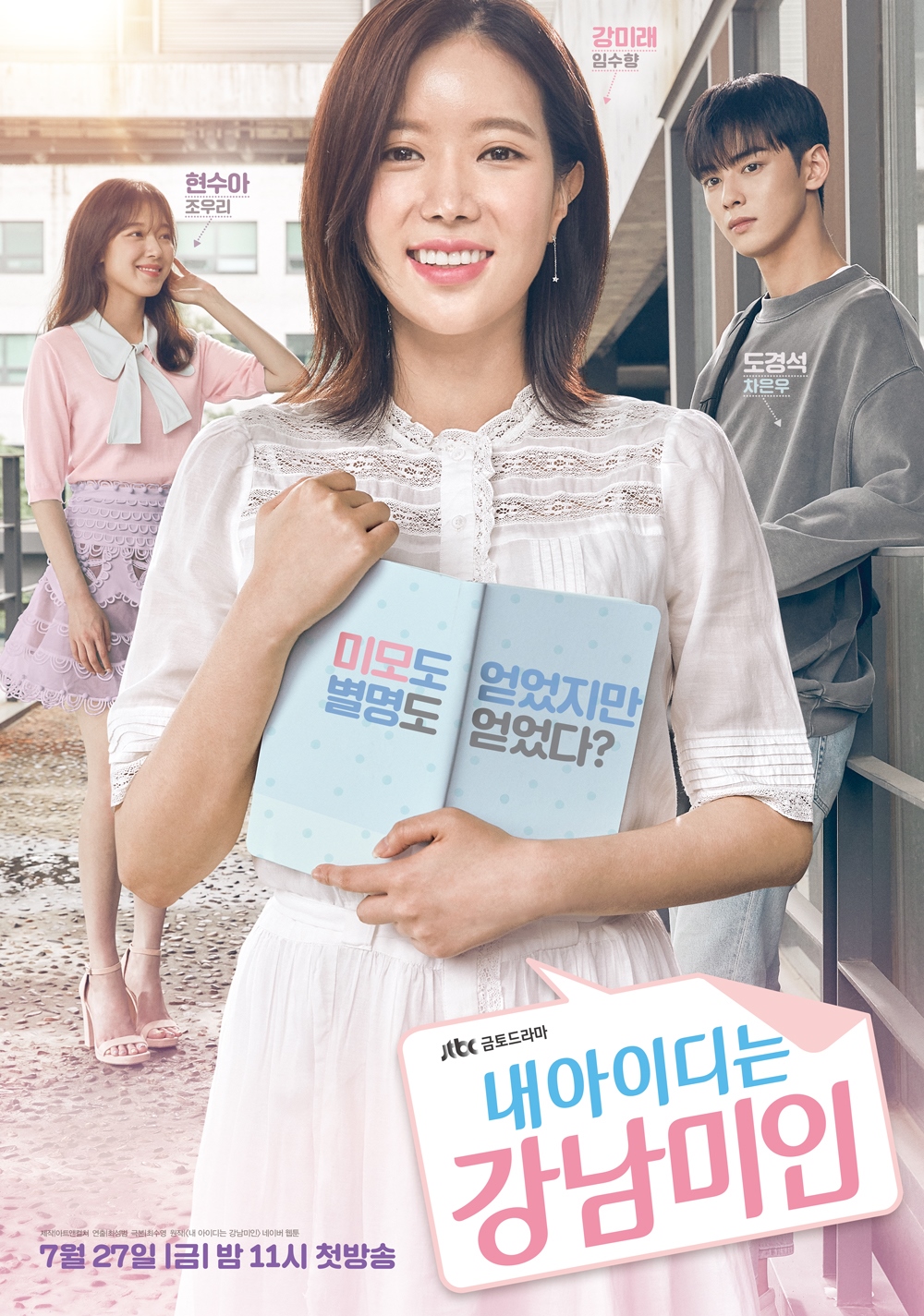
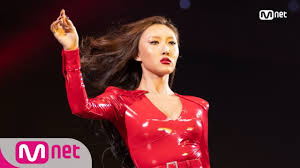
When I first read this article, I was reminded immediately of the Korean Drama My ID Is Gangnam Beauty. This Korean drama is a story about a college girl who struggled with what people thought of as “ugly” appearance and underwent plastic surgery to boost self confidence and avoid other people’s negative judgments or bullying. This drama was released in 2018. It is reflective of Korea’s surgery culture and their overall beauty standards. I have been to Korea twice in the recent two years. There are advertisements for plastic surgery clinics in every subway station. It is hard to walk on the street and not see one person who has done plastic surgery. Plastic surgery is normalized. It has even become a ritual for girls to get plastic surgery as their 18th birthday present. The normalization of plastic surgery, however, indicates something bigger. It means their standard of beauty is also unified. Double eyelids, small face, high nose bridge… In a culture so heavily influenced by the media industry, the appearances of K-pop idols and Korean drama actresses are further facilitating ordinary people’s leads to become them, to use them as their models for plastic surgery. Hence, the Korean Drama My ID Is Gangnam Beauty is speaking to this issue of standardized beauty and, more importantly, people’s tendency to judge people who are not qualified as “beautiful.” The consequence of the societal judgment, of course, is people’s sensitivity to these judgments and lack of self esteem when they know that they do not acquire the “beauty” that the society admires. The emergence of this drama shows that there are people who are reflecting upon the societal effect of plastic surgery. It is interesting how the article connects Koreans’ beauty standards to those in America. Regardless of their similarity or difference, I do see how globalization (especially upon feminism) is affecting Korea’s beauty standard for women. You now see Korean idols like Hwasa and Hyolyn who strive for healthy beauty that is characterized by tanned skin, curvy body and distinctive makeup. They defy Korea’s traditional beauty standard, which is pale, skinny and with a specific make up style. They are not intentionally rebelling against the more popular Korean beauty. Rather, they are sending a message, telling their fans and the general audience that you can determine how you want to look like and your confidence should come from within and not other people’s judgment.

The K-Beauty Influence

The Korean Beauty market is just one of the aspects of the current Hallyu wave which has exploded globally over the past couple of years. As people’s interest and obsession over k-pop idols and k-dramas increased, so did the desire to achieve the same aesthetic that their favorite actors and actresses donned regularly. Now, on many different social sites ranging from Twitter to Youtube you can find people in western countries raving about the fashion, makeup, and beauty aesthetic sported by their favorite korean celebrity. There are tutorials on how you can achieve these idealized looks and blogs which specify where k-idol’s clothes were bought from, and they’re endlessly consumed by a western audience.

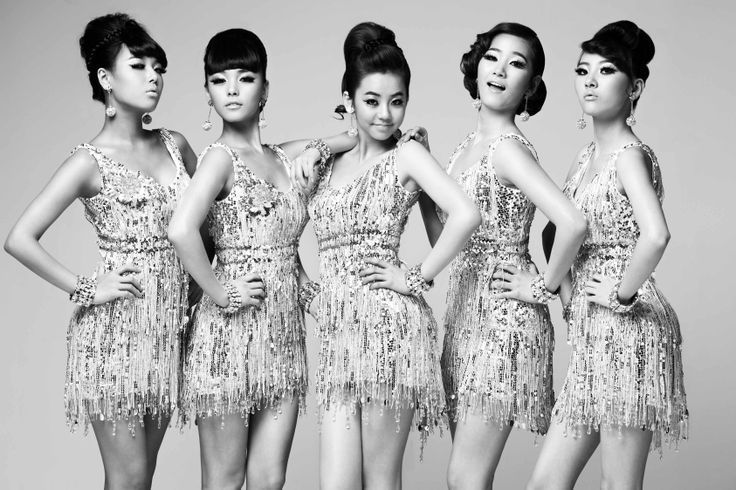
When discussing the way the East Asian beauty standard spread to Vietnamese sex workers, Kimberly Huang discusses how Wonder Girls were idealized as an epitome of femininity. But the reasons behind why the beauty standards were adopted differ from those of a typical k-pop fan. Huang notes that “less developed Asian countries like Vietnam look to East Asia to represent modern cultural ideals.” When looking at this reasoning, it then begs the question why a western fan in a country just as developed as South Korea would also romanticize the beauty ideals and market of an East Asian country.

When I visited South Korea during spring break of this year, I was stunned by how strong the beauty standard was there. Almost every young individual I saw was following this template of beauty and fashion, and made anybody that deferred from it stand out even more. When discussing this phenomenon with my Korean-American friend, she brought up how she always felt slightly like an outcast when visiting South Korea because she didn’t follow these standards. It made me think about how many people conformed to a style of make-up and dress simply in order to fit in and be accepted by others in South Korea. And, furthermore, whether this desire to fit in extended to western fans of K-pop.

Even though they are physically far away from South Korea and the societal pressures present within the country, western fans still may feel a need to follow them in order to be accepted by a society and culture that they heavily idolize. Their love for a certain Korean celebrity may urge them to conform to what they believe the idol sees as beautiful, or even aspire to look like them, promoting a surge of interest in k-beauty. In this way, following the beauty standard of South Korea may make them feel more accepted into that community, and make them feel more similar to their favorite korean celebrity.

In theory, following a beauty trend is harmless, but when a beauty standard of another country is so heavily idealized, I can’t help but wonder whether it’s healthy for anyone, whether East Asian or not, to feel the need to conform to a certain aesthetic in order to feel accepted.

Desirable Disaster

In Constructing Desirable Bodies by Kimberly Huang, she discusses how sex workers in Vietnam alter their bodies in order to perform femininity to the standards of their male clients.  In doing this they are not only making themselves more desirable, but also symbolically representing the economic growth for their country (Huang 135).  Creating a desirable appearance often involves plastic surgery, and this is not only popular in Vietnam, but Korea as well, where there is an increasingly large consumer economy revolving around beauty enhancement procedures.  The article, “The K-Pop Plastic Surgery Obsession,” discusses the links between the phenomenon of hallyu and plastic surgery procedures that are done to make young women look like K-Pop stars.  The article points out that hallyu is not just limited to music, but it promotes beauty standards as well.  K-Pop stars are essentially equated with beauty.  Similarly to Huang, these young women getting these procedures highlight the fact that they are not modifying their bodies to fit Western ideals of beauty, but rather a uniquely Korean idea of beauty that is perpetuated in Korean culture and media: “Sex workers and their clients played a critical role in contesting hierarchies of race and nation by constructing new, distinctly non-Western ideals of beauty through the workers’ technologies of embodiment”(Huang 131).  This article, like Huang, also points out the link between beauty and economic success.  In a highly competitive market, women who are considered beautiful are more likely to get hired and paid more money, similarly to the Vietnamese sex workers who were rewarded for performing femininity with “high class” cosmetic procedures. “Beauty is prized almost everywhere in the world, but in South Korea its value is upfront and open. South Korean employers scrutinize the looks of the applicants — in search for physical attractiveness — in addition to their professional qualifications.” 

Despite the plastic industry not being fueled by entirely superficial reasons, young women still feel immense pressure to be beautiful and often the way to do this is by investing in expensive, painful procedures.  Some girls have accepted the fact that society will judge them regardless of if they get plastic surgery or not, so they feel they might as well look beautiful if they are going to be criticized.  One girl in the linked video below, expresses her sadness with the plastic surgery industry in Korea.  She said that growing up she would always compare herself to the people who had plastic surgery and feel inadequate.  She said that even people who have had plastic surgery procedures claim they are “natural beauties,” which reinforces the idea that women should be naturally beautiful, even when those hailed as the most beautiful are not natural themselves.  She points out that people around her began to lose their individuality because they were all getting the same procedures to look like the ideal form of beauty.

While plastic surgery in Korea and other Asian countries, including Vietnam can serve as a way to resist Western beauty ideals, a means for economic gain, and a way to establish geopolitical prominence, it can have negative effects on young women internalizing these ideas that a woman’s value is in her appearance.

Sounds About White?

Kimberly Hoang’s reading, “Constructing Desirable Bodies,” talks of the constant alterations made to conform to the desires of men globally, whether it be Vietnamese, South Korean men or western men. It is sadly no surprise that women have been forced by society to feel that they should conform to a certain “type” to be appealing. To conform, certain physical alterations, products, and procedures can be made to be deemed acceptable, alterations that I know most of us are familiar with: a rhinoplasty A.K.A. nose job, a face lift, breast augmentation, lip fillers, permanent makeup, double eyelid surgery, the list grows endless. Yet, the beauty standard that is causing an absolute stir, not only in Asia, but all over the world is skin-lightening cream.

The following video is a Thai advertisement for pills that whiten the skin, very evidently causing absolute turmoil in the media due to the blantant racism towards darker-skinned individuals. It was immediately removed by the company Seoul Secret and they issued a quick apology for the racist overtones.

“Eternally white, I am confident.” This advertisement makes it a point to show their audience that if you are not fair-skinned, you automatically don’t take care of yourself, you are not confident, ultimately not being good enough f0r society and being considered lower, not looking like the idols and stars of Korean pop culture.

Hoang writes specifically about Vietnamese sex workers and their struggle to look beautiful to their male clients. “People come to Asia for beautiful Asian women, not for women who look Western” (Hoang). The workers were encouraged to look like the K-pop group, the Wonder Girls, by wearing lots of makeup and baby powder, embodying the “beauty ideals of Korean pop stars.” All over Asia, the beauty standards have been set and reinforced by South Korea. Even if that means, taking a pill to lighten one’s skin because “white makes you win.”

A bigger problem that various countries in Asia are dealing with, including Vietnam and Thailand, is that more affordable skin-lightening “products” are becoming available to consumers of a lower societal class. Individuals who cannot afford these creams and pills endorsed by so many idols can now buy much cheaper online concoctions that contain various harsh chemicals that contain chlorine and “salmon sperm” according to the Thai Food and Drug Administration. People are damaging and literally burning their skin to feel valid.

Skin whitening is not only a way to seem more attractive, it is a way to seem higher in class. Being white is being rich. This idea is maintained by advertisements for these products being sponsored by celebrities and household names, and what an effective way to do so. People of all ages see their inspirations endorsing a product that will cause their fans to look like them, what more could a devotee want.

People must know that having lighter skin does not guarantee validation and there is absolutely nothing wrong with being of a darker complexion. The more these idols support these terrible products, the less hope there is for change to be made.

The glorification of plastic surgery in South East Asia

K-pop beauty ideals and practices have penetrated other parts of the world, particularly emerging markets in South East Asia that are in the midst of contending with the opportunities and obstacles that come with globalization and rapid development. Kimberly Hoang’s article “Constructing Desirable Bodies” resonated somewhat on a personal level with me. As a Korean who grew up as an expat kid in Vietnam, I’ve seen Ho Chi Minh City – its most commercial city – slowly progress from having abject poverty to partaking in globalized economic practices that have brought in more investment and capital.

These economic forces have trickled down to many parts of the nation, including its rampant sex industry. Hoang discusses the complexities of being a sex worker in Vietnam, who is constantly finding a delicate balance between looking ‘pretty’ enough to align with East Asian beauty standards but not completely compromising that oriental look that Western men might desire. What is particularly interesting and eye-opening about Hoang’s piece is the connection she makes between sexuality / hyper feminized practices of representation and a nation’s socioeconomic standing in the broader global context. These conflicting, embodied archetypes of beauty illustrate the different trajectories of capital and culture that circulate in Asia, in which sex workers “alter their physical embodiments to appeal to their male clients’ differing perceptions of Vietnam’s place in the global imaginary”. Whether it is catering to local Vietnamese and transnational Asian elites, or Western businessmen and budget travelers, Vietnamese sex workers are individual agents in their own right who recognize these nuances and thereby perform embodied practices to signify their nation’s place in the ‘global imaginary’. Vietnam’s rising status marks a departure from colonialism and Western dependency, nevertheless, their pursuit for autonomy is still in the hands of the new financial epicenter of East Asia.

These economic and geopolitical shifts have glorified Korean beauty standards and promoted plastic surgery as a way to then play on different desires and imaginations. ‘Technologies of embodiment’, a term that Hoang borrows from Foucault, is the process in which “women produce, transform or manipulate their bodies through particular kinds of body work that signify divergent perceptions of national progress”. Due to the fragmented nature of beauty ideals and how they vary across a spectrum in Vietnam, women look to plastic surgery to enhance their features and therefore construct a more desirable body. Whether it is rejecting darker skin or having a taller nose bridge, Vietnamese women are banking on plastic surgery and all the unrealistic beauty standards stipulated by Korean popular culture and media.

These women are aspiring cosmopolitan subjects that are striving towards self-sufficiency and the promise of a better livelihood. Yet, this process has also highlighted the struggles of transcending their subaltern status to pursue social upward mobility.

“Eyes, nose, lips, yeah Taeyang was right.”

Big, round eyes. Sharp, pointy nose. Long, straight hair. Smaller face. Slim figure. Lighter skin.

All of the features above were described as the “typical Asian beauty standards” that would define Korean women as beautiful and ideal. In an interview by Koreaboo Studios, Korean men were asked to describe their ideal Korean girl and what she would look like. Most responded with similar answers, with a spectrum of responses that nevertheless included at least one of the features aforementioned. Yet there shouldn’t be anything “typical” about these standards.

South Korea is known for its extreme beauty standards that make the country a global center for plastic surgery. In fact, South Korean high school girls are often known to receive plastic surgery as a high school graduation gift from their parents. As described in Hoang’s “Constructing Desirable Bodies,” plastic surgery is considered as a technology of embodiment, or “the process through which women produce, transform, or manipulate their bodies through particular kinds of body work that signify divergent perceptions of national progress.” The presence of such a signifier indicates that there’s a receiver on the other end, such as the clientele of Vietnam sex workers, whose needs are satisfied accordingly in order to increase the status of the region. Vietnam sex workers altered their bodies in order to fulfill the radicalized and classed desires of their clients, which in turn transforms them into representatives of Vietnam. In other words, they symbolize and signal the growing potential of the nation to its potential investors, and their bodies and performances of femininity are used as signifiers of modernity and economic strength of their nation.

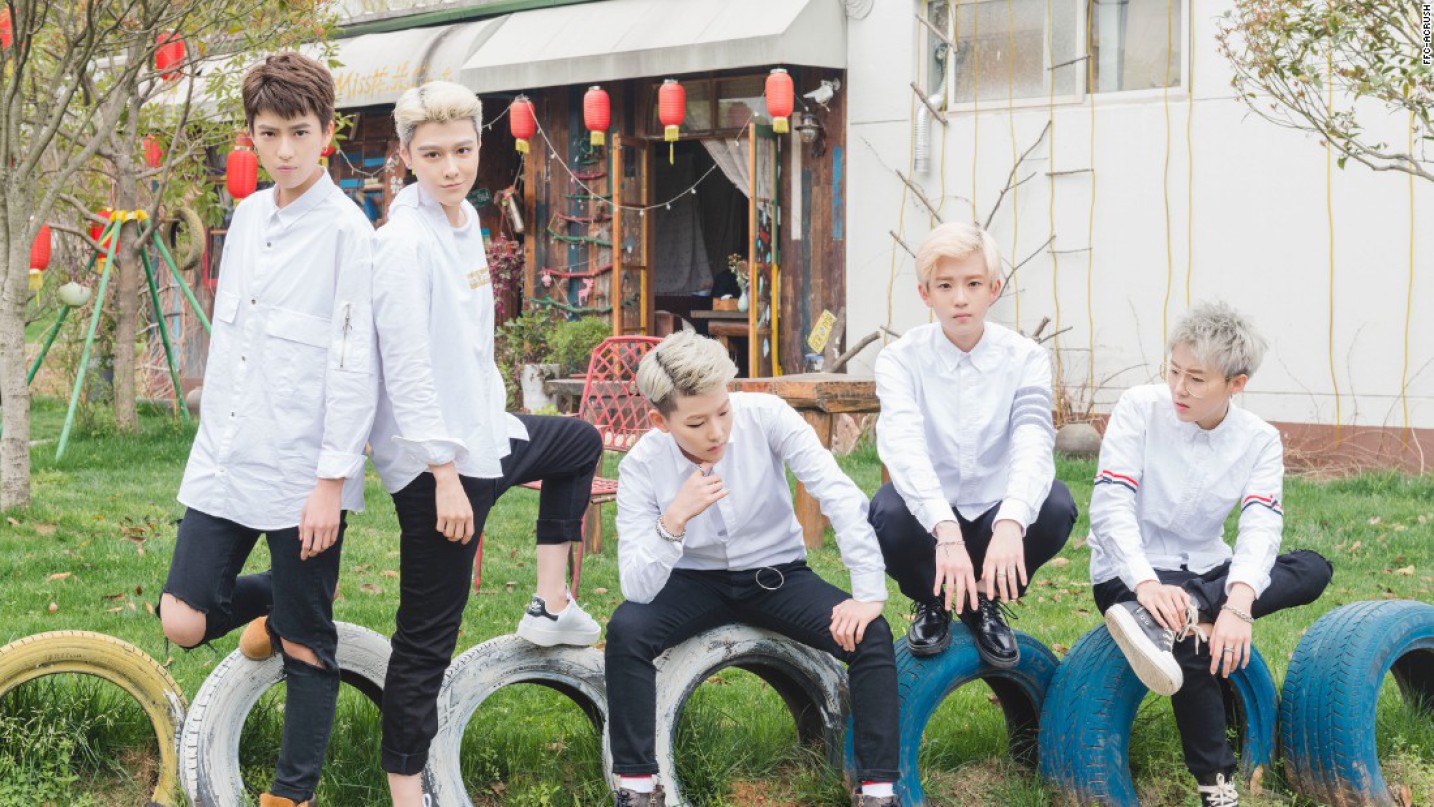
As Hoang pointed out, technologies of embodiment are rapidly evolving and can often quickly respond to evolving standards of beauty. For example, a “boy band” named FFC-Acrush was announced in China in 2017 as China’s answer to K-Pop. The group became a major sensation in China with almost a million fans on Weibo. But the catch is: All of the members are actually girls posing as boys and prefer to be referred to as “mei-shao-nan,” or a gender-free term that translates to “handsome youths” in Chinese. The group’s androgynous style made waves in not only China but also in the West. The mastermind behind the group, Wang Tianhai, stated that the intention of the group is to tap into the unique beauty of gender neutral and to celebrate “a special sense of beauty and a unique sense of handsomeness”. The group’s unique positioning demonstrates their appeal to a new demographic in this generation, in which the image of a female is no longer dictated by “big eyes, small face, long hair, slim figure.” With distinctly gender-segregated groups in K-Pop, perhaps this is China’s rebellious act to push C-Pop to the global stage.

Source: The Culture Trip