The Kim Sisters, Seo Taiji and Boys, and the characteristics of K-pop today

If someone were to ask where they should look in order to understand the origin of K-pop, many people would direct them to the iconic trio of Seo Taiji and Boys. Debuting in 1992, this group was arguably the first to create music completely different from what was in the Korean music scene today, pulling influences from the west to create a foreign sounding song about South Korean issues. In some regards, this would be the correct answer to their question. When looking at K-pop today, there is no other group that fully shows the birth of a music genre which has taken over nationally and globally. Seo Taiji and Boys were the first to take western music influences, such as R&B, hip-hop, rap, jazz, etc., and use them to create a new hybridity of music, which appealed massively to the younger audiences. This hybridity, combined with their colorful visuals, eclectic fashion, and big dance moves, is a big fundamental of K-pop today, making Seo Taiji and Boys a prime example of K-pop’s beginnings.

Seo Taiji and Boys performing “Come Back Home”, live on MBC in 1995


However, many people would forget to direct them to a different trio that may show just as much of K-pop’s beginnings as Seo Taiji and Boys. This trio is the Kim Sisters, three young girls who performed music in South Korea for American Soldiers during the Cold War. Formed in 1954, the Kim Sisters first began to perform for GIs that were stationed in South Korea by the American army during the Korean war, performing songs for them in night bars. The girls were young at the time, ranging in ages between 11 and 13, but they garnered an extensively large amount of attention and popularity among the soldiers, which was just one example of a larger trend taking place at the time: a rise in popularity of all-Asian girl bands. The girls ended up having such an impact among the GIs that they were able to perform in America, even on the Ed Sullivan show in 1959, performing songs, mainly all in English, that showed off their singing abilities, and wearing western outfits that showed off their figure.

The Kim Sisters performing

The Kim Sisters were very talented, and their performances contained many of the elements that even Seo Taiji and Boys followed, including some dancing and songs influenced or taken from the west. In this way, their group shows an origin of modern day K-pop, albeit in a more diluted manner than Seo Taiji and Boys. The success of the Kim Sisters performing on The Ed Sullivan Show is a good example of the additional cultural exchange that took place during this time period, since it shows their success in presenting the American television audience with a foreign group. But even more than that, the success of the Kim Sisters with the American GIs showed a different aspect of their popularity which may still be present in K-pop today.

When the Kim Sisters began to perform in Korea, one of the reasons they became so popular, even though they were very young, was because of the fetishization of young Asian girls and women at the time of. Because of America’s troops stationed abroad in Korea, there became an increasing amount of sexualization of the Asian female figure due to the prostitution and interracial romances which occurred there. This is a sad reality for the all girl group, but one which can hold true even in today’s K-pop. As K-pop began to grow past Seo Taiji and Boys, the artists began to be idealized by their fans, even going so far as to have artists in the K-pop industry be called idols due to the way they were romanticized by their fans and put on a pedestal. Especially as K-pop becomes more global, a resurgence in the sexualisation of the Asian figure is growing as well. This is another fundamental that was first seen with the Kim Sisters, and one which is just as much apart of K-pop today.

The Kim Sisters and Seo Taiji and Boys were two very talented groups that contributed a lot to the Korean Music industry, and more specifically the K-pop industry, and although what their groups and their success provided were different, they both became important examples of K-Pop’s beginnings, and the fundamentals and characteristics, both positive and negative, that were created by them which are still a big part of K-pop today.

Psy Deserved Better: Orientalism and Asians in American Media

Benjamin M Han’s article “Transpacific Talent” explored American Orientalism and the idea of the Asian as the “perpetual foreigner” in America, through the study of the Kim Sisters’ rise to fame in tne West. For me, this article evoked a phenomenon in a more recent past: Psy’s “Gangnam Style”. We all watched this song and choreography shoot to virality in 2012, and, for many of us, it was the first instance of Asian visibility on a scale this massive, thanks to digital media and the Internet. However, many aspects of Psy’s brilliant fame in the United States seem reminiscent of that of the Kim Sisters.

Ellen brings in PSY to teach Britney Spears the viral dance

For one, both acts were seen as more of a fascinating phenomenon than serious musical artists. Psy’s appearance on Ellen reduced him to nothing more than a surprise dance teacher for Britney Spears; at one point he even asks, “Can I introduce myself? Not just dancing?”. The basis of the American media’s fascination in Gangnam Style was in its cheesy dance and catchy chorus. Parodies of the arose rapidly across the Internet. At its core, the mainstream American media’s fascination with Psy and his viral song revolved around how eclectic, how “other” it was. It reflected a brand of “Asian” humor that purely seems humorous due to its novelty. Pikotaro’s PPAP (Pen Pineapple Apple Pen) saw a  surge in popularity in America for seemingly similar reasons. In many of his public appearances in America, Psy was depicted as a funny man who does a funny dance. His artistry is completely overshadowed by how much of a novelty he is. In fact, during his Reddit “Ask Me Anything” session, Psy was asked what one thing he wished more people knew about him was. His answer was, “I compose all my music myself”. 

In Han’s article, he mentioned how the Kim Sisters perpetuated a stereotype about submissive, sexy Asian women to an audience white men, especially soldiers. In the 21st century, the way American media presented Psy perpetuated a stereotype about Asian “otherness”.  The fact that these performers are Asian was played up, then and now; it becomes frustrating how shallow Asian representation can be. And after America began to move on from “Gangnam Style”, the American media hasn’t followed Psy since, solidifying the fact that he was seen as nothing but a temporary novelty. However, the tides of Asian representation in America are turning. Asian artists such as 88rising, and especially BTS, are beginning to break into the American mainstream, demanding the respect that other artists are given, and staying for good. There is no viral song or dance, but rather consistently rising sales and growing fanbases that pique the interest of the American public. Although their Asianness is visible, it is not blinding anymore.

K-drama Transnational Consumption-Production Integration into a Global Phenomenon

When Youjeong Oh described the live production method of Korean dramas and the tight schedules and deadlines pressuring producers, actors, and editors, I was reminded of similarities to production schedules in Japanese anime and manga. For manga, such as those drawing weekly issues in Shounen Jump ie. Naruto, mangakas had to produce a chapter a week, which often resulted in a drop in quality and/or inconsequential arcs and chapters that don’t contribute to the longer story being told. The “plot change” influence of consumers on producers also reminded me of the Shounen Jump ranking lists which ranks the most popular characters in the magazine which in turn influences the manga artists in determining public approval of characters and the storyline thus far. In fact, massive public outcry at the last episode of the original run of Neon Genesis Evangelion pushed for the studio and Hideki Ano to produce a ending episodes that fit his original vision titled, End of Evangelion.

Original last episode of
Neon Genesis Evangelion (1996)

The End of Evangelion (1997)

Additionally, unlike the general American media, Japanese anime and Korean dramas often put a lot of production costs into original soundtracks, as featured in the catchiest anime openings, and the most memorable Korean osts; I will never forget the first time I heard this ost in Goblin, and how much it brought together the whole episode and ending.

Goblin OST | Stay With Me ft. Chanyeol of EXO

Another new phenomenon related to K-drama that I’ve noticed is the integration of Korean entertainment companies in production both in terms of providing actors and musicians. YG Entertainment started off producing k-pop idols but have since expanded to managing some of Korea’s most famous actors such as Lee Jong Suk, Nam Joo Hyuk, and Yoo In Na. Similar business expansions are seen in SM Entertainment and JYP Entertainment. Furthermore, singers and artists occasionally make their transition into acting such as Park Sooyoung from Red Velvet, Suzy from Miss A, and IU. Many sing songs featured in the drama as well. This integration and cross disciplinary strategy roots back to the skillsets acquired by K-pop idols, from acting to performance, through entertainment companies.

These integrations all service to the overall experience of K-dramas. K-dramas are no longer merely a consumption of images, but a consumption of images, audio, and lifestyle (when considering the advertising backers attached to the media through hallyu-hwa). Through selling fashion, beauty products, and lifestyles as those portrayed in K-dramas, audiences and purchase a tangible part of the imagined fantasy of those dramas. By adding an audio layer through memorable osts and music from the drama, the audience “do not remain within the framework of the drama; rather the boundaries of the drama, everyday life, and tourism are blurred” (Hirata 153). Such blurred frameworks of the drama bleeds out into everyday life through the diaspora and also through non-diasporic consumers into forming a globalized transnational fanbase that redefines the identity of k-drama culture and sensibilities within a global context. It’s the power of the k-drama branding and visual recognition that allows us to understand movie cuts like this scene from Thor: Ragnarok within a new context:

Stay With Me / K-drama Parody

Such parodies and emulations of k-dramas through memes, reenactments in variety shows, youtube scene uploads, etc. are indicative of a new generation of consumption, of media being derivatives of each other in a constant cycle of regenerating, reintegrating media into new contexts and connections. Such reinterpretations are only possible with the advent of social media, and the recognizable dramatic branding of k-dramas allowed them to “[plug] into massive flows in the global media ecosystems” resulting in “its consumption in the United States finally and decisively [departing] from the marginalized ‘ghetto’” (Lee, 188). Once in this global consumption-production ecosystem, viewers can reinterpret media or pull traits and styles to emulate in other forms of media such as in the Thor: Ragnarok example.

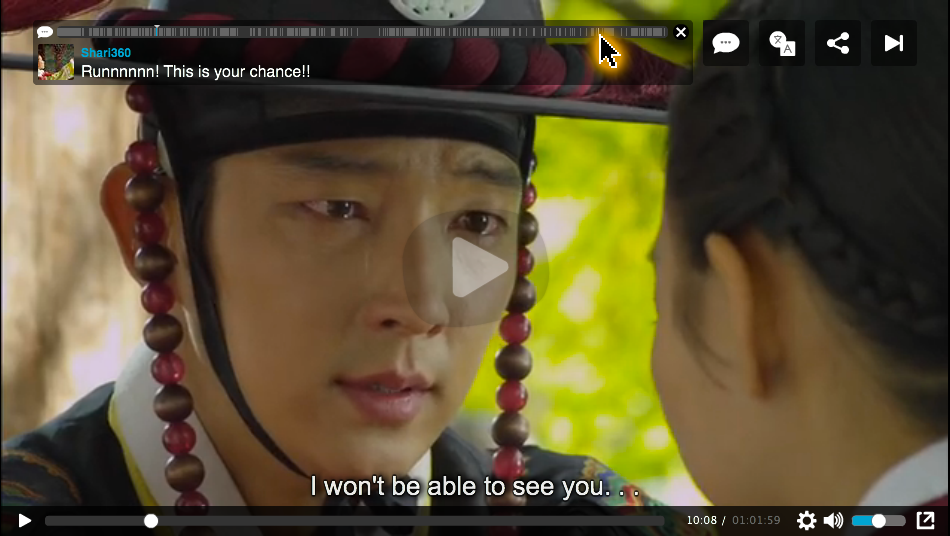
Another point I want to touch upon is how legitimate K-drama streaming sites such as Viki, has integrated features from Japanese streaming sites such as Nico-Nico, namely the integration of scrolling/timed comments, or comments corresponding to and appearing at specific timestamps as indicated by the viewers.

Such interaction between viewers forms a transnational global community between the consumers and highlights the quick integration of features of interactivity into k-dramas. Consumers can interact with k-dramas from whichever level they like, from either just leaving a comment, or fully immersing themselves in the addictive production.

This addictive production, however, though interesting and addictive stories are told and consumed, does raise concerns for me about freedom of expression and the diversity of critical stories; does the massive stake big business and government have in k-dramas limit the film team’s ability to tell groundbreaking, revolutionary stories? Is our global popcorn consumption and emulation of k-drama romantic values as admired by Japanese women highlighted by Hirata passive suppression of our sociopolitical concerns and criticisms of big business and government? I don’t have a solid answer to these questions yet, but as a consumer, I strive to be active in my consumption and the implications of what I’m watching.

Fansubbing and Accessibility

This week’s readings hit closer to home because I am Japanese myself. Hirata’s piece really hit me personally because I remember teasing my babysitters, daycare teachers, and my grandma for loving Bae Young-Joon. I remember the trailer for Winter Sonata being played sporadically all the time, and thinking Bae was a woman before my grandmother quickly corrected me that he was a very handsome man. I was only 4 or 5 when I first encountered it, so I didn’t know what the show was about. All I knew was that Bae was on TV all the time, and women the age of my aunts and grandma were all obsessed with this man.

What I found interesting in conjunction to Lee’s piece revolves around accessibility and how access to KPOP had allowed Japanese women in particular (according to Hirata), to see Korea differently. In Lee’s piece, the topic of fansubbing was brought up, and I couldn’t help but be reminded of this tweet that talks about at time when Anime wasn’t officially subbed, but was fansubbed, and how hilarious translators’ notes are.

I found this discussion of fansubbing and translators notes particularly interesting because many times I sit there watching anime that is subbed, and realize that the translations are not exactly correct. This made me wonder what it would be like if Korea hadn’t changed its policy on ensuring Korean fluency when distributing in content. Another thing I noticed is that these translator’s notes act as conversation between one otaku to another, or one viewer to another. Suddenly, the viewing experience isn’t singular, but it feels like you’re watching it with someone else. In regards to this, there was a tweet in this thread that gave an example of subs on Thai dramas, and how translator’s notes feel like you’re watching the show with a friend.

In relation to Hirata’s piece, I wonder if JPOP like the original Hana Yori Dango (Boys Over Flowers) had done anything for Korean viewers to see Japan any differently. If women in Japan fawned over KDrama character and plot’s nostalgic and fantastical quality, did making a Korean version of a Japanese anime have anything to do with their perception of Japan? Was it simply because they saw Japanese anime culture was popular so they adapted it as a business endeavor? Or could there possibly be a case where despite historical and political tensions, they saw Japanese people or their culture as something else the way Japanese people viewed Koreans? And with the rise of accessibility to KPOP and JPOP, what does that mean for the respective countries when it comes to cultural exchange?

Dominican Actress Stars in K-Drama and My Husband Has a Family Gets Mexican Adaptation

Brace yourselves, because this mini K-drama I’m going to introduce you to is one for the books.

The Curious Case of Oh My Grace

Oh My Grace (2017) was DramaFever’s first original K-drama/K-web series starring Grace Subervi and Kyung Hwan Kim. The plot goes something like this: aspiring fashion designer is failing at achieving her dream career in New York, alcohol makes her magically appear in South Korea, she meets a wealthy boutique owner, then an aspiring K-pop idol, and all three fight for their dreams. Please go ahead and cringe through this teaser:

Cute concept. Poor execution.

But that’s not so important! What’s interesting here is that Warner Bros (owner of DramaFever) was looking for a Latina actress to star in a K-drama because they were aware of the growing fans of Hallyu within Latin America.

Here enters Grace Subervi: a Dominican actress raised in New York who’s been involved with the Korean Entertainment industry in America for over a decade. As you would expect, she speaks Korean fluently and travels to South Korea often enough. She’s worked as a host and interviewer for MTV K, KCON, and DramaFever (which is why she was considered for the role in Oh My Grace).

If, like me, you had the same reaction to this headline, then you might be wondering: does the curious case of Oh My Grace mean that a K-drama can be called as such even if one or more main actors are not Korean? Would the introduction of other non-Korean/Asian ethnic groups into doramas affect the appeal of the genre to foreign communities?

These are valid questions to ask during this new era of global media ecosystems, where the flow of visual media is multidirectional and slowly becoming less U.S./Euro-centric.

Although there is no right answer to these questions, a central issue of this case is the assumption that non-Korean fans want to see themselves represented K-dramas. The appeal of Hallyu to fans from around the world is not just about good pop songs or feel-good dramas. I would argue that the shared experience of learning Korean and exploring Korean culture is central to the globalized euphoria for Hallyu.

Social Media and the Adaptation of Korean Dramas

Thanks to social media, language barriers and cultural differences have served as benefit, rather than a hindrance. Social media has allowed for non-Korean fans to create their own online communities where share their love, knowledge and translations of their favorite K-dramas.

Sites like Soompi.com have a Spanish counterpart (Soompi.com/es) for Spanish-speaking fans around the world to access and discuss the latest Hallyu news and content.

In fact, K-dramas have been so prominent in Mexico for the past ten years that they are starting to influence Mexican productions. The Mexican telenovela Mi Marido Tiene Family (My Husband Has Family) is an adaptation of the South Korean series of the same title.

Mi Marido Tiene Familia vs My Husband Got a Family


The Mexican version, which is one of the most watched shows in Mexico, aired its first episode in 2017 and culminated this past February after two seasons and 256 episodes. It would be interesting to explore in detail what aspects of the Korean original are replicated and which ones are, indeed, adapted to suit a general Mexican/Latin@ audience.

It’s clear that the consumption of Korean entertainment is no longer just expanding within online fan communities. The Korean formula is starting to impact local entertainment in other countries and Hollywood is no longer the only place where artists are heading to for opportunities.

Waves come and go. K-dramas (at least) are here to stay.


Side note: Yes, I share the same last name as Grace Subervi. Yes, I am Dominican too. No, I don’t know if we’re cousins.

Can we define the Koreanness of future Kdramas?

While reading Youjeong Oh’s chapter on “The Interactive Nature of Korean TV Dramas,” I was immediately reminded of an original Norwegian webseries called “Skam” which gained a large international following due to its presence on social media. The plot of the show was based on a group of Norwegian teenagers and their lives in high school, however the concept of the show was its existence in real time with the audience. Instead of full episodes, 4-minute clips and social media and text message conversations from the characters are posted on the NRK website daily during the webseries’ seasons. This garnered immense attention on internet- fanbase websites because the audience lived with the characters in real time. Since the posts appear to occur spontaneously, their consumption seems much more natural. An audience member scrolling through their instagram feed might find a new post by one of Skam characters in between those of friends and family.

Yet, I could argue that the concept of the show’s assimilation into the audience’s real life paradoxically makes it extremely unnatural due to its strict timing and production. Then perhaps Korean TV dramas are the shows that assimilate into the audience’s life the most naturally and organically. Youjeon Oh’s chapter discusses the relationship between the audience and production of Korean TV dramas. The practice of live production comes from the importance of audience response, and forces the show to be created on a loose narrative. Instead of big production companies creating a finite product, and people viewing passively, the audience has an impact on the trajectory of the show. Oh notes that many popular series have even changed the finales- concerning the life or death of characters, or relationship outcomes- based on audience responses. Actors who were initially hired as supporting roles might become leads a few episodes later if they gain enough fan support for their characters.

While Skam was finitely scripted with changes based on audience interest only occurring between seasons, Korean TV dramas evolve in real time with the viewer’s interests in a much more natural manner.

Now that Hallyu has globalized Korean cultural products, and many global popular streaming sites such as Netflix and Hulu are getting rights to Korean TV dramas, it will be interesting to see how diverse and foreign responses might begin to shape a series. If the Korean-speaking audience has always been an active agent in the production of a show, then first-generation Hallyu followers might have just been a shadow audience of those productions and their translations. However, today, subtitled series are released within an hour after their release on Korean sites, so non-Korean-speaking audience members can interact with the product in the same time as those in Korea. Depending on how fast the international responses make it back to Korean production companies, I believe that in a few years we could trace how Korean TV drama becomes an international product that is dictated by audience responses all over the world. Simply put, only the production of shows is purely Korean, the shows themselves might become global, universal products.

Identity, Consumption, and the Cultural Power of Korean TV Dramas

“Endeavors to create the consumer’s self identity often involve their consumption of products, services, and media” (R. Elliot and K. Wattanasuwan, 1998).

The concept of Individual identity—or, the “self”— has often been linked to ideas of consumerism. In a capitalist society, an individual’s identity is largely constructed and displayed through the consumption of various cultural products. As social media platforms, digital media markets, and the Pop. Culture industry continue to expand and globalize, our lives and our identities become more and more entwined with the cultural products that we consume. This weeks readings highlight the ways in which the consumption and production of Korean TV Dramas impact the formation of various identities. The identity of fans and fan bases, and the national identity of Korea are formed, strengthened, and remolded as a result of the growing popularity of Korean TV Dramas.

Youjeong Oh analyzes the “discursive consumption” of Korean TV Dramas, and emphasizes the different ways that fans interact with and react to the shows that they watch. Rather than acting as passive consumers of TV Dramas, fans often play an active role in their production, and develop strong affective attachments to TV shows and stars that manifest as online fandoms on platforms like ‘DC Inside.’ As individual fans form online communities around their favorites shows and celebrities, the collective identity of fanbases grow and concretize, allowing fans to interact with TV stars and producers. Through social media platforms and online galleries, fans enact a dialogue with TV producers that enables them to directly participate in the production of certain shows. Oh describes how fans often influence the plot lines of many TV Dramas. Online conversations amongst fans provide producers with insight into what viewers want to see happen in each episode—a process made easier by the ‘live production’ of many Korean TV Dramas. In the case of Sungkyunkwan Scandal, fans even impacted the level of background music after voicing complaints of the music being too loud.

Not only do online forums and social media platforms allow fans to influence TV shows, but these sites also foster active communities that provide fans with a sense of belonging as they form a sort of social identity centered around a particular TV show or desirable TV star. In addition to communicating with producers, fans also communicate with each other. Oh notes that fans produce and reproduce images, videos, and even develop their own languages and lingo. I found the snack deliveries and attendance checks to be particularly interesting. As fans’ attachment to certain shows and stars deepens, they use the Internet as a space to organize, raise money, and display their love for the shows that they watch. The attendence checks establish “senses of belonging, similarity, simultaneity, and thus attachment to each other among users. Therefore, the spontaneous check temporarily forms a community, a group of people who are dedicated to a similar interest at the same time” (Oh, 143). Online forums and social media platforms provide a space for fans to engage with each other, and interact with the producers and actors of their favorite shows. Similar to KPOP fandoms, K-Drama fanbases demonstrate the ties between identity formation and consumption. As fanbases form online, they construct their own collective identies that are held together by online participation, and feelings of desire and belonging.

Yukie Hiratz’s Touring ‘Dramatic Korea’ points to a different kind of identity that is reshaped by the emergence of Korean TV Dramas—the conceptual identities of tourists and the Korean National identity. Hiratz focuses on Winter Sonata, and marks the shows’ popularity in Japan as a factor in the reshaping of conceptions of traveling Asian bodies and the ‘tourist gaze.’ “Indeed…subjects who were moving had been presumed to be male, white, and heterosexual; static women emphasized against dynamic men” (145). Winter Sonata helps generate more tourism to Korea by transforming it into an attractive tourist destination for Japanese women, rather than a “men’s space haunted by guilt.” Hiratz writes, “such a new ‘gaze,’ noticeable among women, overcame the male-dominated imperialistic historical context, reflected new tendancies created by global consumer culture in the 1990s” (148). Shows like Winter Sonata intersect with imperial histories, racialized and gendered conceptions of tourism, and transnational diasporic communities, thus reshaping the global image of Korea from a multitude of perspectives.

The Mutable Nature of Cultural Flows

In this week’s readings we looked at Hallyu, the AFKN Nexus, and cultural production in South Korea. What intrigued me was the idea of nationalism in both North and South Korea. The country split into two ended up becoming a playing field for the two powers that gave rise to the Cold War, capitalism, and communism. Both sides had their own definition for what made Korea, Korea, the sort of isms, the quintessential qualities that a Korean “should” have. The situation was similar to two children looking at the number 6 from opposite sides. One of the children sees the number 9, but the other child sees the number 6. They’re both right, but they can both be wrong too. It’s all based on perspective and an understanding that people have different ideologies they believe to make sense of the world.

Colonialism and the idea of cultural imperialism plays such a big role in globalism, especially for America. America likes to be the big brother of the world, butting into places and promoting Western Exceptionalism. As Klein’s reading tells us, there is a major military presence around the world. The presence of U.S military serves a dual purpose, not only is it to police embassies and protect sites of U.S interest, it is also a way to tell the world that the U.S has its hand in everything, a remnant of maritime warfare strategy that Teddy Roosevelt believed in, “Speak softly, but carry a big stick.” Introducing people outside of America to Western media creates new fan viewership and customers who thus working into capitalism. The media that Korea was creating was constantly in comparison to Hollywood, which led to a shift in the movie-making industry to not only appeal to a Korean audience, but a global audience as well.

The idea of Han, speaks to the pain and sorrow of the Korean people for the hardship they endured, including the occupancy by the Japanese. The Japanese took over the cultural production of Korea and also did their best to get rid of the historical content in Korea. By eliminating a culture, you eliminate a part of a country’s identity. In return the State Controlled Korea attempted to restore Korean culture by promoting and regulating content. All content was made to promote “Koreanism”, and there was little wiggle room for complaints. While the intent was well meant, it only bottlenecked people more because they had just escaped control, only to be controlled again. At the time, especially after 2 World Wars, the world was already in the process of globalization. By lifting the bans, and giving artists more room for personal expression and development, Hallyu was born.

Above are two separate links to the same instance in both movies called My Sassy Girl . The first is the original movie made in Korea starring Tae-Hyun Cha and Ji-Hyun Jun, and the second is a , and the second is a 2008 remake starring Elisha Cuthbert, and Jesse Bradford. My Sassy Girl is the first Korean movie I ever watched, with subtitles of course. My Korean friend in junior high school showed this film to me and I couldn’t stop laughing until the movie got incredibly emotional. The reason I picked these two scenes is because while they are both conceptually the same, the fact that a remake was made for U.S audiences featuring American actors just goes to show that movie directors and producers believed that this was a profitable venture. It also goes to show that culture doesn’t just flow one way. The readings talk about Japanese influence and US military influence in Korea, but now thanks to Hallyu, not only does outside culture flow into Korea, but Korean culture flows outward to the rest of the world as well, reassuring and reaffirming the mutable and mercurial nature of this intangible thing we call culture.

The Reaction Videos & Korean Movie Trailers

After the K-pop dance music videos have become a huge phenomenon amongst those YouTube viewers across the world, the fandoms of each K-pop idol groups began to make reaction videos for their fan groups. This was another a huge wave risen in the YouTube culture as a byproduct of the K-pop popularity. A lot of YouTubers began to create various reaction videos: videos reacting to the dance covers, viral parodies of the K-pop music videos, or to the “Jikcam,” which are the videos taken individually by the fans of a certain idol member of the group, and etc.

What’s more interesting is that these reaction videos are recently started to aim Korean movies too. As K-pop industry expands throughout the teenagers around the world, Hallyu began to strike the world and made people turn their interest into various other Korean cultures, and the Korean cinema has been taking a big part of it. Park Chan Wook is a Korean movie director well renowned for his previous work Oldboy (2003) and Thirst (2009). He had also founded his own movie production company, the Moho Film, in 2002. This company has been marketing their movies in an aggressive way, and YouTube was one of their significant marketing methods. There is this clip of two people reacting to one of Park’s movie trailers, The Handmaiden (2016), and these two show how the transnationalism is starting to become real.

The woman in the video says, “We had those dolls when I was growing up” (at 3:36),  or “My girls used to go through over that” (at 7:23), which clearly show that she can somehow connect to these scenes with her Asianness. Although there are many other non-Asian YouTubers reacting to Korean movies, they still can somehow share the commons when watching the video since the universality of human emotion leads people to sympathize easily with the movies when they portray cross-cultural themes in the scenes. Through reacting, people feel a sense of kinship, and a pure satisfaction by receiving a confirmation from others that what they are feeling right now are exactly what others are feeling right now too. This is how people re-identify themselves, and further re-unify with others through watching the scenes, and this is where the transnationalism begins to extend since the borders of nationality are blurring off through people’s empathies.

Further, the author of Pop Cosmopolitics and K-pop Video Culture, Michell Cho, says in her reading, “The talent agency YG entertainment shows no hesitation to give away content for free on YouTube knowing that the sort of devotion that marshals the resources evident in the dance cover video leads to acts of consumption far greater than the purchase of pop singles as commodities” (254). Just like YG, the Moho Film is trying the same thing for its movies like, distributing several clips of the movie for free along with the trailer in the YouTube, before the movie launches officially in the market. By doing this, the YouTubers who react to Korean movies get to have a chance to do more of their reaction videos besides the trailer, and those who watch YouTube movie trailer reaction videos will get to have another chance to look up the other various clips of the movie that they are interested in.

The whole combination of the dynamics of intimacy and the various commodification methods are helping this Korean cinema industry to actualize the transnationalism more than ever. Thus, people from other countries start to look at the historical backgrounds of the Korean movie. The Handmaiden, for instance, people start to pay attention why people in Korea were wearing all the mixed versions of Japanese traditional clothes and the Korean’s, or why all the interiors of the Korean houses are jumbled up with the Japanese and European styles, and why the movie has the scenes of a Korean man trying to entertain Japanese aristocrats. Then, at the end of the movie, people finally realize that it was actually in the period of Japanese colonial, and there was a history where some opportunists in Korea earned a lot of money through enacting pro-Japanese actions, and justifying the Japanese annexation of Korea.

The whole nationalistic idea that is portrayed in the Korean movies are making people who make reaction videos and people who are watching their reaction videos to be more curious about the Korean history and culture, and gradually question themselves how to accept the cultural intentions put into the Korean movie industry, and further expand their personal ideas transnationally. Commodifying the Korean movies through the accessible, affordable, and dramatic marketing device like YouTube, has led to the production of various reaction videos for the Korean movie trailers, and these reaction videos have also led the interconnection of individuals and groups beyond the state boundaries to be more close than ever, and commodified the people’s empathies in a smart way, which finally played a huge role in expanding the essence of Korean nationality under Hallyu-hwa.

Dismantling the West and the Rest Narrative: How New Korean Cinema Defied US Hegemony

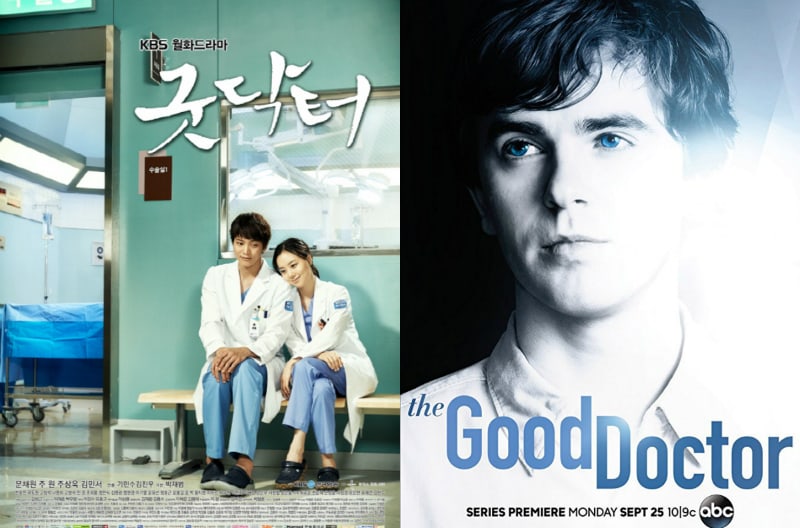
As a country that was and continues to be influenced by the legacies of American imperialism, Korea is often perceived as being a copycat, a country that lacks creativity and struggles to preserve a sense of “authenticity” within its culture. Korean film and other media content are becoming a global phenomenon, capturing audiences across vast transnational spheres. The Korean film industry has become more increasingly lucrative and has capitalized on broadcasting and licensing its content to various foreign markets, in which a growing number of foreign film industries are betting on remakes of popular Korean movies. Whether it’s the Bollywood version of the Korean movie ‘Montage’ or the American remake of the drama series ‘The Good Doctor’, it goes without saying that the booming success of Korean film and media has further galvanized the diffusion of its soft power through the prism of culture and cultural goods. However, there is still much debate surrounding whether or not Korea in part owes that success to Hollywood and the blueprints it has laid out for the world to revere and reproduce. In order to fully understand the undercurrents of this New Korean Cinema phenomenon, one must first and foremost trace its history back to colonial periods.

Michael Robinson contextualizes the shift that we are seeing within the culture industries from a country once overtly controlled by the state to one that has embraced a more liberal democracy. Cultural production and its themes were often centered around the struggle of defining and preserving a Korean identity in the face of colonialism and cultural domination from Japan and the US. There was censorship, restrictions and repressive state control that inhibited the flow of imagination. And then, through the gradual democratization of ideologies and subsequent structural transformation, freedom of expression especially in the arts became unprecedented, allowing creators to brazenly produce films with politically charged meanings.

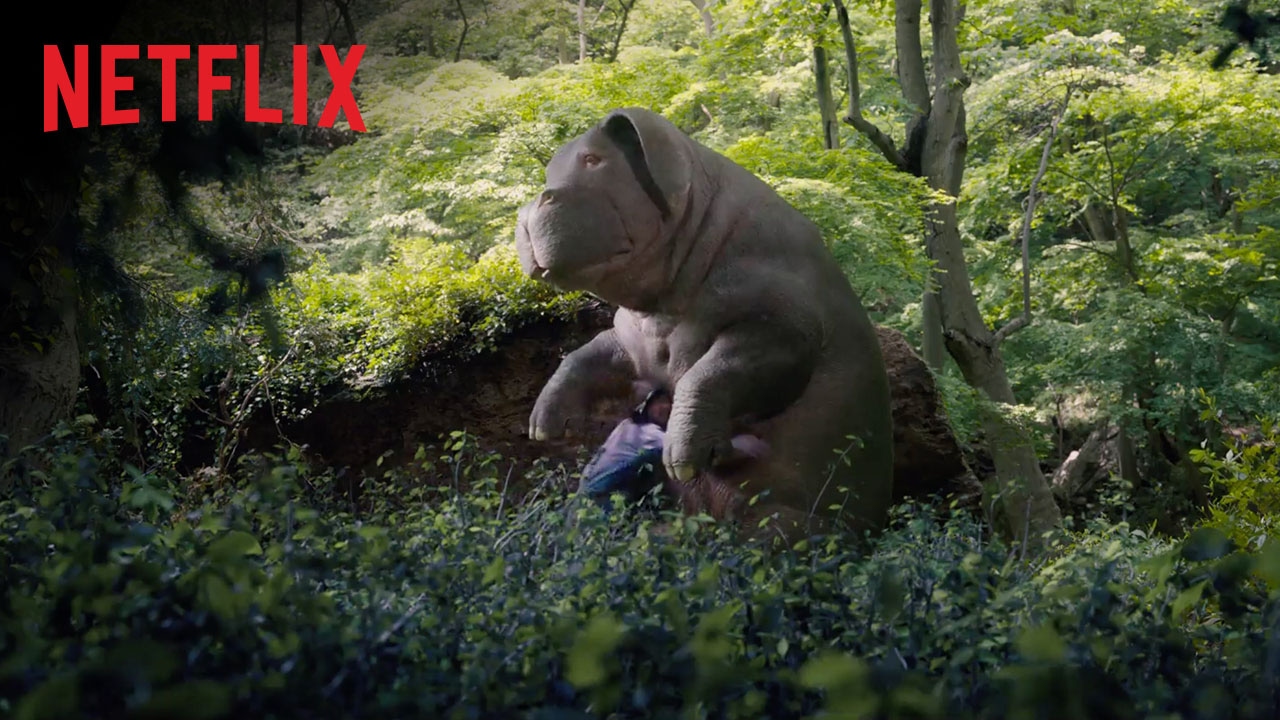
The desire to consume and emulate American culture as well as the abiding bitterness towards the violence imposed by US military presence in Korea combine to create a dual sentiment that highlights the complex relationship and history that the country has undergone. Bong Joon Ho’s film “The Host”, according to Christina Klein, grapples with this very tension. The presence of American military in Korea came as a double-edged sword. On the one hand, Americans used their cultural products as a means to spread and sustain their hegemonic power, but on the other, it gave rise to Korean cinema by opening doors for aspiring creators via the Armed Forces Korea Network-TV, and hybridize their storytelling with widespread blockbuster trends. Okja, which was also produced and directed by Bong Joon Ho, also seemingly echoes this sentiment. The film is a critique of neoliberalism and touches on other themes such as coming of age. The movie was relatively successful, but more importantly, it highlighted a new and hybrid intercontinental production phenomenon.

We are constantly critiqued and analyzed through the lens of the West, where the benchmark for success or failure is contingent upon what is stipulated by the West. This ultimately both overtly and covertly reinforces our subaltern identity, but the relatively recent success of New Korean Cinema might be demonstrating a form of resistance and adaptability to this narrative. Korean filmmakers are making a conscious effort to narrate the stories of a people whose livelihoods were once dictated by colonialists but in ways that also cater to a shifting transnational climate. Korean cinema has substance and its growing reverence proves that we are not simply a beneficiary of American culture and production, but a producer of culture in our own right.