Korea: K- Film, K-Dramas

Every time I go back to Seoul for breaks and such, I am reminded once again how fast Korea transforms and changes. A country that was pretty much much built in less than 60 years, in South Korea, everything moves and revolves so quickly. Not only the infrastructure in Korea, but also the culture as well. In Robison’s chapter, he stated that “Hallyu revitalized the Korean film industry, which rebounded from the humiliating slide and turmoil suffered during the 1980s and the 1990s.” With the successful democratization movement of the late 1980s, South Korea is struggling to keep its traditional values in the face of a rapid growth in national prosperity and standard of living.

Unlike most other countries, where Hollywood films and productions dominate, South Korea’s domestic films dominate the Korean film market. Even with a very slow start, Korean movie industry quickly caught up to the pace of others, with movies like My Sassy Girl and television dramas like Winter Sonata. “The Host” by the director Bong Joon-Ho is still thought to be one of the most successful movie in the Korean film industry. The plot is centered around Park Gang-Du who must save his daughter from a monster terrorizing Seoul. When I was watching this movie, one thing I noticed right away was its blatant anti-American sentiment. Born and raised in Korea, I have always thought Korea had a very favorable view of US. Korea looked towards Western American trends for fashion, music, etc. However, The Host offers the perspective of anti-Americanism that exists in South Korea’s political spectrum. In my opinion, the reason “The Host” was able to break records was yes for its fun and entertaining story line, but also the movie’s ability to mix in history and nationalism in its story.

In terms of international popularity, in my opinion, Korean television shows, or “dramas” have gotten more attention abroad. Most Korean dramas share very similar storylines, plot, and similar character development. I think Korean dramas compared to films have gotten more popular internationally as many popular Korean films tend to focus on Korea’s nationalism (popular movies like Taegukgi Hwinalrimeyeo)  while Korean dramas share a more romance, contemporary themes (popular dramas like The Heirs, Boys Over Flowers)
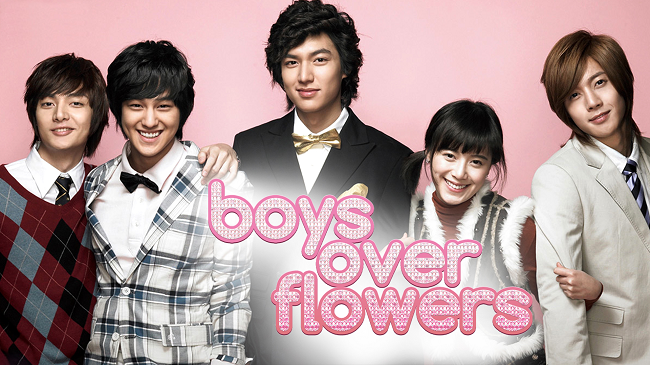
South Korea quickly transformed its country from rural to super urban. Compared to other Asian countries, it has only been short while that South Korea exported and imported foreign culture products in and out of Korea. How do you guys think K-culture has become the global phenomenon it has become today and why K Culture?
YouTube As The New AFKN: Finding Genre Hybridity In KPOP Music Videos

Christina Klein discusses the unplanned consequences of the AFKN in South Korea, highlighting how the AFKN had immense influence on critically acclaimed Korean filmmakers/directors. She states that because of the language barrier, Korean audiences, one of them being the director of The Host, had purely absorbed his understandings of genre through visuals and semiotics. This allowed him to view genre in a way that was different to what the Hollywood industry did, and thus gave him more freedom in playing with genre and not feeling pressured by genre constraints.

What immediately came to my mind in Klein’s discussion is how YouTube acts as the new way of accessing foreign cultural products, and how KPOP music and its videos not only reflect past iconic production from Western pop culture, but also reinvents it by not conforming to genres. Perhaps that is why it is so hard to define what KPOP is, or what KPOP sounds like or looks like because just like what the AFKN had done for Korean filmmakers, YouTube has allowed the KPOP industry to be exposed to a multitude of cultural production that they then can incorporate into their own. In this post, I want to examine one particular music video to not only dissect the different genres being included in the song, but also how the videography and music video concept is a hybridization of different cultures.

Hate // 4Minute

4Minute’s Hate music video currently stands at over 54 million views. Having it be co-produced by Skrillex has not only helped boost its status but also exemplifies the hybridity of the song from the production standpoint. It starts off as almost a sad ballad, then transitions into a more R&B style, then the drop/chorus is a very heavy trap/bass/edm style song, and then the next verse begins as a slow rap. Within the first half of the song, 4 different “genres” of music can be heard, and yet the song overall doesn’t feel like a definable genre. Having Skrillex as a producer is an important fact as he has been making music in a pop punk band, and then more famously known as an EDM producer. Having worked with artist from all genres of music from Justin Bieber, to Diplo, to The Weekend, and A$AP Rocky, utilizing his work for Korean music (that is known to be a hybridity of genres) was a smart choice.

In terms of the visuals, the first shots are very rosy, and romantic, then transitions into a desert scene. For whatever reason, I immediate felt a sense of deja vu. I then did some digging and realized that the desert scene was reminiscent of Coming Home by Dirty Money ft. Skylar Grey. Take a look:

The main drop is obviously an ode to hiphop culture with the suit and timbs, an ensemble that has been seen over and over again in US hiphop culture. This isn’t to say that 4Minute’s videographers decided to copy Dirty Money’s music video. What I’m trying to get across is that Coming Home was a very popular song in 2010, and we see this desert concept being used not only in 4Minute’s work but in many other KPOP music videos. YouTube has allowed groups like 4Minute to gain access to other visual cultures to gain inspiration and play around with it. What makes Hate stand out against Dirty Money’s music video is that while his music video is very monotonic, 4Minute’s is more vibrant and uses the desert shot more strategically to match the tone and lyric of the song.

I think it can definitely be argued that YouTube can be seen as the new AFKN, despite it not being a political endeavor. The consequences of the gained access to YouTube is no doubt very similar to the consequences of the exposure to AFKN. Korean artists in the KPOP industry can utilize whatever visual/audio culture they absorb on YouTube and proceed to make a product that is never tied to one specific genre, rather, plays around with all of the genres to create something that is both aurally and visually stimulating.


Joint Security Area (2001): A Symbol of the 90s Korean Film Industry

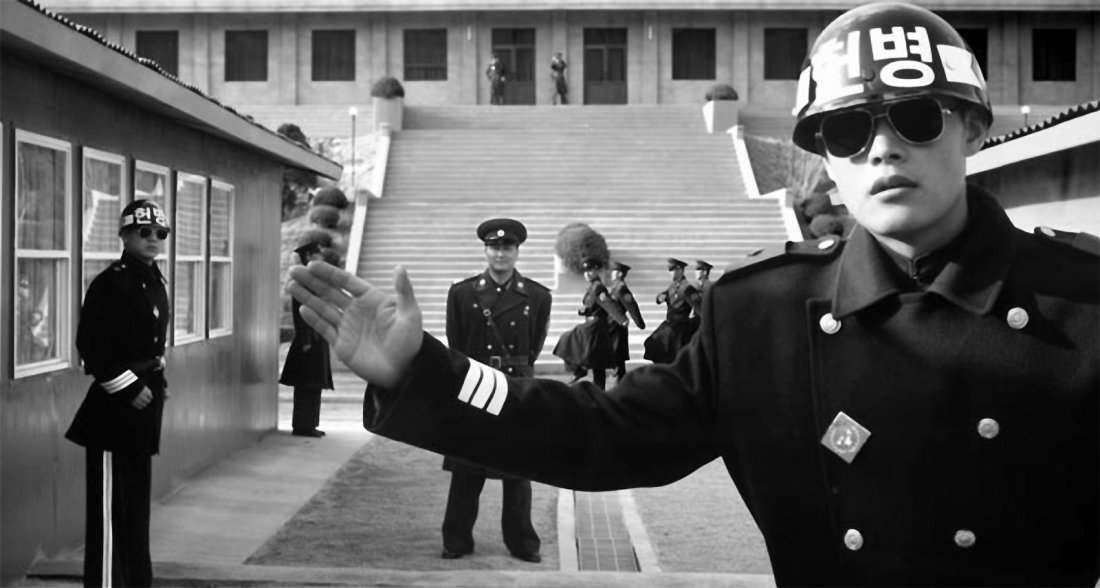
As mentioned in this week’s reading by Robinson, Korea’s culture industry went through a transition when the government relaxed its censorship restrictions. This led to a new generation of artists and filmmakers in the country. One these famous filmmakers, Park Chan-wook, is an example of this shift in Korea’s society His directing ability and films are not just famous in South Korea, but also worldwide with films such as Oldboy and Sympathy for Lady Vengeance. A brief overview of one of his films, Joint Security Area (2000), is linked below to provide context which I will use to explore Robinson’s text

I believe that  Joint Security Area (2000), directed by Park Chan-wook, does an excellent job at showcasing the social changes that the new generation of filmmakers and artists brought about. The film is set in the late 1990s/early 2000s and follows the investigation of the murder of two North Korean soldiers stationed along the Korean DMZ. Although the film’s setting is one that is familiar to the previous meta-narratives that existed before censorship restrictions were relaxed, the film merely utilities this setting to tell a mystery thriller film with excellent storytelling and character development. I would highly recommend viewing this film either because of its relevance to our class or even just for enjoyment.

The main distinction of this film is that it humanises North Korea by exploring the friendship that develops between the North and South Korean soldiers stationed along this the political boundary. This approach takes something familiar (the South Korean soldiers) and juxtaposes them with something that is considered dangerous (North Korea) and explores the relationship that forms between both. Just like the soldiers, the film attempts to subvert the political boundary by showing these four soldiers as friends who talk about everyday, relatable topics like the women they’re dating or married to, or playing games like hopscotch. However, the film merely attempts to subvert the boundary as the moments of character development between the soldiers are often cut short by the reality of their situation resurfacing through their duties to their states. Even though it appears clear cut, the story told in the film blurs the line set by the North and South Korean states by showing a meaningful friendship develop between soldiers on both sides. The film raises the stakes on the Korean identity by questioning the viewer on the significance of politics on national and cultural identity through the relationship portrayed between the soldiers.

The Culture of Idol and Fan Interaction

The readings for this week focus on the utilization of Kpop and how Hallyu 2.0 has given it a worldwide influence.  I was most interested in the concept of fan engagement with the music artists and their products.  While this connection can be found in any “fandom,” I feel that it is especially impactful in K-Pop, as both the fans and the artist / companies greatly benefit from fan engagement.  In K-Pop Idols, Social Media, and the Remaking of the Korean Wave, Jung notes how one of the only differences between the third and fourth (current) wave of Hallyu K-Pop is the dramatic increase of international attraction.  Jung cites fan-organized Flash Mobs as a type of “outreach” to get artists’ attention, in hopes of having them perform in their area.  While this often comes from the fans, the artists and companies mutually benefit from the organic exposure.  On the other side, labels often create competitions for dance covers, in which the artists’ labels, fans, and Korea’s efforts in utilizing K-Pop for Hallyu all benefit: “One of the biggest K-pop cover dance contests, 2011 K-Pop Cover Dance Festival, was supported by the Ministry of Culture, Sports, and Tourism, Korean Culture and Information Service, Korea Tourism Organization, and Asiana Airlines, confirming Korea’s nationwide support of Hallyu K-pop” (82).  This festival alone had 1,700 international contestants, which proves how influential K-Pop cover dances have become.

Kent A. Ono and Jungmin Kwon’s Re-worlding culture? YouTube as a K-pop interlocutor notes how YouTube’s formation of easily accessible media has created “viral sensations” which gives YouTubers the potential to achieve overnight fame.  As many of these Flash Mobs and Dance Covers are uploaded to YouTube, it allows for K-Pop’s exposure to all, whether they intend to find it or not. In Pop Cosmetics and K-Pop Video Culture, Michelle Cho discusses the sensation of “reaction videos,” and highlights “[Very Funny] PSY Gangnam Style Music Video Reaction Collection.”  People who reacted in this video pointed out how Hyuna makes a cameo appearance in “Gangnam Style,” which gives the reaction video the aspect of fan interaction.  As we have discussed in recitation, fans clearly have power in how well a K-Pop idol can be received / promoted by other fans, and how fandoms are able to establish connections over seemingly small things such as noticing Hyuna’s cameo in “Gangnam Style.”

Through these readings, I continue to consider the impact of K-Pop as a cultural product and an international phenomenon (activity through dance and covers?).  As we continue to explore K-Pop’s origins and claims of cultural appropriation in its music and video production / idols’ aesthetics, I often wonder about the impact that urban dance has had on the industry and culture as a whole.  I know that many US choreographers such as Ian Eastwood, Keone Madrid, Sorah Yang, Ellen Kim, etc. have choreographed for K-Pop idols, and I would like to know more about the relationship between a choreographer and the artists, with questions of monetary compensation, recognition, and authenticity in mind.  I also wonder about how much crossover there is in fans of urban dance and fans of K-Pop (do fans of K-Pop become fans of urban dance, or does K-Pop take priority?)

Can American desirability lead to Korean disloyalty?

Youtube as a channel almost mirrors most, if not all, of what K-pop stands for — the visuality of music. It’s a medium that has contributed to the enhanced popularity of the transnational media culture that was produced in a non-Western nation. With this growing popularity, I understand there are certain aspects to this recognition and desirability that may be a cause of concern.

When the K-pop artists are brought to a western audience and attempted to be made famous in the global market, a variety of actions are taken (Ono & Kwon, 206). Foreign members are introduced to the group, foreign language is taught, and much more. As for the songs, there is the inclusion of more American lyrics, i.e. doing more of what the American audience likes to see, and this may not always be great because in the process, the origin of musical style “loses significance within reciprocal processes of cultural exchange” (203). In contrast, as Dr. Crystal Anderson stressed during class, when Beyonce goes to Korea, she doesn’t put in as much effort; she just performs, hops on a plane and is on her way back to America when finished. Easy access is key here. Given the Korean government had so many restrictions in the past but now has altered those policies and given artists more agency and lesser limitations, K-pop groups are moving more rapidly towards the western sphere and trying to find and fit into the colonial space to reach a global audience. What does it then mean for authenticity and loyalty of K-pop artists to their origin brand? Can it put at risk and increase the possibility of these artists who are now exposed to international fame, money, and recognition, to partially betray their own and strive to appeal more specifically to the American audience over the Korean?

Youtube does indeed have a big part to play in the virality of K-Pop worldwide and the globalization of the culture. As Hyun mentions, “concatenation of cultures, is part of the Korean Wave, a result of globalization processes” (202). The colonial processes then become quite complex and tangled. I find it then fair to agree with Ono & Kwon in that, “..the border between worlding and un-worlding diminishes, or at least, the meanings become more blurred, as possibilities for shifting power relations and social positions emerge” (211).

According to Ono and Kwon, “Unlike traditional media Youtube does not work without “you”, people to upload videos, view them, offer comments, and read those comments” (208). In that way, could we say that Ono and Kwon are somewhat aligned with the ideology Fiske grounds about the cultural industry — of the consumer, i.e. the “you” having more control than the producer? Could Youtube be an example Fiske could use to support his argument? Or, would Adorno still be right in his stance given at the end of the day it still is the producer who’s putting out the content the consumer is allowed to consume? As Spivak stated, this “might be an imperial process of imperially reinscribing imperial culture into the “Third World” contexts in order to legitimize imperial dominance”, however, it has helped. In that case, the current popularity of K-pop culture might really be an example of a hybrid colonial form that both worlds and un-worlds culture.

What makes K-Pop groups successful in the West?

K-Pop is going global. The genre has recently been gaining a lot of traction both from dedicated international fans and curious Western media outlets, which may make it seem like it was only recently that K-Pop artists have begun to get recognized and promote themselves in the West at all. This, however, is not the case.

As outlined by Eun-Young Jun in chapter 3 of Hallyu 2.0: solo artist and actor Rain held a showcase in New York’s own Madison Square Garden in 2006 that wasn’t well received but that didn’t deter his success continuing his career in Korea and Japan, solo artist BoA made an unsuccessful American debut in 2008 after leading a successful career in Korea and Japan for 8 years, and solo artist Se7en “moved to the United States in 2007 to prepare for his American debut, but after his debut single ‘Girls’ (2009) flopped, he returned to Korea” (77-78). A new wave of K-Pop emerges in the late 2000s, and while groups like Big Bang, 2NE1, and Girls Generation did begin to gain some attention from the likes of MTV and some US talk shows beginning in 2011, the hype for these groups in the Western media was still relatively short lived (80-81).

But that was then. Compare that to now, where it’s become difficult to keep track of the amount of K-Pop artists that have performed on US talk shows, starred in Buzzfeed Celeb videos, played festivals like SXSW and now Coachella, and have held successful multi-city concert and fanmeet tours across North America and beyond. So why is it, then, that K-Pop artists coming from the same training system, and even same entertainment companies, who are delivering the same genre of music and level of performance are now becoming successful in the West? Something has to have changed for this to be possible now in ways that it was not before.

Pieces like Michelle Cho’s “Pop Cosmopolitics and K-Pop Video Culture” point to YouTube, and more broadly the work of international fans utilizing YouTube and other social media sites to produce user generated content like reaction videos and dance covers which interact with and effectively promote K-Pop to an international audience without the entertainment companies themselves having to do any additional work or investment. In Hallyu 2.0 it is argued, “By expanding engagements with fans, actively encouraging K-Pop fans all over the world to participate in fandom activities through social media, the Hallyu K-Pop industry pilots its potential to the maximum with very little investment of either time or money” (86). This is an incredibly shortsighted view into the dynamic processes in which K-Pop spreads to Western audiences, but in particular completely disregards the investments of time and money that companies are putting into making their K-Pop artists accessible internationally.

Even just looking at the roster of activities that K-Pop acts are up to in the States nowadays, it is clear that artists and their companies are investing in building an international presence. But even before they make it onto American soil, an effort has to be made for the K-Pop artist to attract international fans and keep them interested. Entertainment companies hold auditions globally to source international talent, require their trainees and artists learn foreign languages, invest in translators to translate the artists’ shows, music videos, and social media posts, and sometimes hire entire management and marketing teams specific to the country they are trying to promote their artist in, as well as risk costs on planning large scale tours to be able to bring live shows to international fans. Clearly, constant focus as well as long term vision are required on the part of the company on top of their monetary investment in order to ensure a group is marketable abroad. The international success of newer wave K-Pop is also commonly attributed to the industry’s adaptation to social media, not in the way of directly bargaining for fans to produce content that serves as free marketing, but rather as a means of keeping fans updated efficiently, producing more content to make full use of the platforms, and providing opportunity for fan-idol interaction from anywhere in the world.

While fan consumption, feedback, and engagement play a hugely important role in the cycle of the production of K-Pop, it isn’t possible to point to one aspect of one platform (like reaction videos on YouTube) as the main measure of success in pushing K-Pop into the Western market when there is conscious effort put forth in every part of the the production process to help K-Pop artists gain the attention of international fans and stay relevant in the Western market – which, of course, is to say nothing to the shifting ideals of Western culture itself that may enable more open-minded consumption from Western consumers as time goes on.

YouTube: What K-Pop is Doing Right

YouTube has clearly played such a huge part in the growth of Hallyu since the inception of second-generation idols such as Girl’s Generation and BIGBANG. The release of music videos on these platforms creates more opportunities for foreigners to stumble upon their music, and clearly K-pop as a genre is taking over this platform by storm.

What I’ve found interesting in the past few months of K-pop’s overtaking of YouTube is the deeper integration and interaction of “behind-the-scenes” content. A recent shift I’ve noticed in the YouTube space is that many popular music broadcasting stations are releasing “individual fancams” in which you get continuous uncut shots of idols dancing to their songs. As Kent A. Ono and Jungmin Kwon state in their piece “Re-worlding culture?,” it is this type of content that helps “shorten the emotional distance between singers and fans,” which can especially help fans develop further “interactions” with their favorite members as they get to see more of their professional mannerisms in a more intimate way, and the vertical video format itself makes it feel almost as if you’re looking at them through the lens of recording from your own phone. If anything, it can also even serve as a way for fans to focus on certain members, as there can be many cases in which certain members of larger groups get lesser lines than other members, and thus not get a lot of screentime.


Furthermore, it is through this that even idols themselves can further promote themselves in rather inventive ways unseen in the music industries of other countries. Of course, there are the individual projects that members pursue, such as self-choreography videos or covers of English songs, but one particular video that caught my attention was the [Dance the X] video for Chungha’s “Gotta Go,” which featured not only Chungha herself dancing to the song, but also other famous K-Pop cover groups, such as Ellen and Brian and ARTBEAT.


What I found rather interesting with this video was not only its inclusion of cover groups but the fact that fans were just as happy to see their favorite cover groups as much as they were happy to see Chungha. If anything, fans of the cover groups were praising Chungha for dressing very casually while the guest dancers got to be more glamorous with more coordinated outfits, giving these guests to live out their fantasies of putting on the K-pop star facade. As Eun-Young Jung states in her piece “New Wave Formations,” it is because of K-pop’s “participatory culture” that enables “both the industry and the consumers to conveniently promote, circulate, appropriate, re-create, and recirculate media contents” (Jung 84) and the fact that these media conglomerates are taking advantage of the rise of cover groups and the sort of content they produce makes it evident that this sort of fan-made content is only going to become more popular, and, in turn, help popularize K-pop even further.

Clearly, YouTube has played such an important role in the way K-Pop has grown to reach international audiences, and now with the rise of new types of fan-serviced media, it’s bound to get even bigger and more popular with each passing second.

The K-Pop Industry Explained by Real K-pop Idols

From K-pop music videos to ant farms, YouTube is the hub for all sorts of content creation. In “Re-worlding culture: YouTube as a KPOP Interlocuter,” Kent A. Ono and Jungmin Kwon describe the website’s ease of publishing Korean music and recognition of K-pop as a genre (208). Personally, I have been using YouTube to watch K-pop music videos for years, and I was soon drawn to other aspects of the genre through my recommended videos, the auto-play function, and curiosity.

In light of this week’s topic, Hallyu 2.0, my exposure to K-pop has led me to discover more YouTube channels that focus on K-beauty, exposing the industry, and everyday vlogs. For example, soobeanie is a retired K-pop idol who, through her series “K-pop Insider,” answers questions about the darker sides of her past work. In the past, we have only seen K-pop idols in music videos or scripted shows, and seeing them break from the industry to film, edit, and publish videos themselves is very new. Many YouTube videos show the glamorous aspects of being an idol: they get their hair and make-up done, sing and dance on stage, and engage in fun games on variety shows. However, ex-idols like Prince Mak and Grazy Grace talking about dating bans, strict dieting rules, and how exhausting their schedules during promotions are intriguing and gives more insight into how the K-pop industry operates. It’s through these platforms that people can appreciate the aesthetics of K-pop and learn about the effort these idols put into their music. And having these raw, real-life experiences versus professionally-edited, more “broadcast-appropriate” type of videos coexist on the platform shows YouTube’s scope that allows multiple perspectives on the music industry.

It’s the mechanics of YouTube that make it such a powerful tool. The platform can be accessed globally and has interactive capabilities and minimal limitations (208-209). Grazy Grace posted a live video where she interviewed Brown Eyed Girls’ Miryo, and the comment section was filled with: “I love you Grace!!” or “Much love from ___!” or Grace’s own comments. Being able to chat with Grace in real time breaks down barriers between a fan and a celebrity. In today’s digital world, fan engagement through the Internet is exciting because it lets anyone with working wifi to speak with his or her favorite artist.

YouTube allows K-pop idols themselves to express their raw selves to their fans, and their fans appreciate that. For the music industry, it means more viewers and greater attention to its behind-the-scene narrative and fabulous music videos. YouTube’s expansive network inspires diversity in Korean pop-inspired content.

“XYZ Reacts to…” : The K-Pop Music Video Reaction Phenomenon

As Kent Ono and Jungmin Kwon discuss in ‘Re-Worlding Culture? YouTube as a K-Pop Interlocuter’, one of YouTube’s biggest strengths is its interactive capability. K-Pop fans, referred to as “prosumers” (Ono, 208) in the paper, can upload their own videos such as “their own self-filmed dance or musical covers” (Ono 208-209) and reaction videos.

Music video reactions are just one of the many popular forms of fan-produced content. Reaction videos involve an individual or group of people recording themselves as they watch a music video/dance practice video for the first time, giving their commentary and first impressions throughout. Music video reactions gather hundreds of thousands of views, especially for videos containing popular groups such as BTS, EXO, and BLACKPINK. The music video reaction community has produced countless famous YouTube personalities that are ubiquitous in the K-Pop community, such as JREKML, KSpazzing, and DKDKTV. Fans enjoy watching these reactions so that they can share the same excitement when a new video is released. Michelle Cho explores, in “Pop Cosmopolitics and K-Pop Video Culture”, the idea that reaction videos “emphasize commonality” and the “universality of human nature” (245).

“… purpose and function of K-Pop reaction videos by revealing the genre’s over-determined heritage of colonial visual politics, linking it to Freud’s phylogenetic European imaginary and the project of decoding primitive behavior, particularly for those who identify the spectacle of K-pop as a foreign object that requires the mediation of others’ responses to understand or to collectively neutralize, or both” (Cho 249).

I argue in this post that in addition to emphasizing commonality, the fact that reaction videos allow viewers to feel a heightened sense of pride in their artists (especially when their favorite group’s videos receive positive reactions) is an even more prominent cause for the explosion of the reaction video phenomenon.

“Watching others moved by watching both presents and enacts the erotics of identification and projection, rather than unfamiliarity and unassimilability” (Cho 249).

One stream of music video reactions that I noticed started getting popular a few years ago is ‘non-Kpop fan reactions’. These videos involved music video reactions filmed by someone who has never been exposed to or is extremely new to Kpop (enough to classify themselves as a ‘non-fan’). I believe the reason these non-kpop fan reactions gained so much popularity is that they build on the fact that actual K-pop fans feel a sense of pride when someone else enjoys their favorite group’s music, especially someone who doesn’t know much about K-Pop. For example, many BTS fans enjoy watching ‘non-Kpop fan reactions’ of BTS music videos, dance practices, and variety show appearances. The process of witnessing a new ‘fan-in-the-making’ is exciting to someone who already devotes so much of their time to the group.

Yet another spinoff of these non-Kpop fan reactions is that of industry professional reactions. A few categories of these types of videos include ‘Classical Musicians react to…’, ‘Dancer reacts to…’, ‘Vocal coach reacts to…’, ‘Grammy Award Winning Grammy Engineer reacts to…’, etc. These professionals utilize technical terms when watching and describing the music videos and/or dance practices, often praising the quality, creativity, and uniqueness of the content. This gives an even higher emphasis on the recognition and validation K-Pop fans so desire to have from those considered knowledgeable and experienced in their fields. The thought process goes something like this…

  • Reactor uses specific music theory/dance/vocalization terms while watching the video, establishing them in the fans’ eyes as an accomplished and knowledgeable individual
  • Reactor expresses a liking for the video they are watching
  • Fan feels validated because things they like are also liked by and deemed worthy of a professional’s time

Works Cited

Cho, Michelle. “Pop Cosmopolitics and K-Pop Video Culture.” Asian Video Cultures : In the Penumbra of the Global, Duke University Press, 2017.

Ono, Kent A, and Jungmin Kwon. “Re-Worlding Culture? YouTube as a K-Pop Interlocuter.” The Korean Wave: Korean Media Go Global, Routledge, 2013, pp. 208–209.

Appreciation/Appropriation? Racial Plagiarism? Mindless or Mindful Consumption

Out of the three readings we had this week, what resonated with me the most was Minh-Ha T. Pham’s article, Racial Plagiarism & Fashion. I am too used to hearing the terms cultural appropriation/appreciation more so because I am an MCC major, and am a student at a socially conscious institution like NYU. By critiquing Marc Jacob’s ignorance and cultural appreciation, I see how both of these terms can be problematic.

Cultural Appreciation attempts to deny/remove the legitimacy of voices that are in protest by claiming that their disproval is invalid because the author had the pure intent of admiring aspects of a different culture for its aesthetic qualities.

This point relates to Crystal S. Anderson’s point on page 298 and 299 of, Hybrid Hallyu: The African American Music Tradition in K-Pop. “the commodification of soul reduces blackness to a commodity that could be bought and sold – and – this is important – without the cultural and social markers that have defined blackness.”  People can appreciate the artistry and aesthetic qualities of blackness, but at the end of the day, they are still free from the stigmas and prejudices that African-Americans still face today. As a friend once told me, if you’re going to sit with us at the dinner table, at least stick around for when things get bad.

” This commodification opens up the performance of soul to anyone but also makes it possible to level charges of inauthenticity of performances by non-black performers.” Sometimes it’s not just commodification but cultural flows in tandem with commodification that explain why cultures clash with each other and even exchange. Pham is careful in making this significant distinction by writing, “If racial plagiarism is not about cultural appreciation, it is also not about cultural sharing and diversity…this kind of copying produces social and material enclosures rather than cultural exchange.”

What immediately came to mind while going through these readings was the webpage Stuff White People Like, also known as SWPL. SWPL was created by Christian Lander in January in 2008 and is a satire featuring a list of over one-hundred things consisting of activities, foods, and trivia, that White people partake in.

In this video Lander is in a video talking about several topics on the list of Stuff White People Like that consists of 136 topics as of today. He points out there’s almost never a situation where it’s not appropriate for White women to wear yoga clothes and how some of them are turning a gigantic profit out of appropriated Yoga. Another example he brings up is how White parents refuse to have their children vaccinated out of fear that they might catch something worse than diphtheria, tetanus, pertussis, and other diseases.

Some of the items that are on the list that Lander doesn’t talk about in the video include: #129 Banksy, #101 Being Offended, #96 New Balance Shoes, #73 Gentrification, #62 Knowing What’s Best For Poor People, #55 Apologies, # 45 Asian Fusion Food, #5 Farmer’s Markets, and #20 Being an Expert on YOUR culture.

Part of the reason comedy thrives, especially satire, is because it wouldn’t be funny if it weren’t true. There is a level of truth in the joke that makes us laugh. However, there is a problem with this list. What this list seems to look like a list of activities that White people love to do, in actuality there is a power relation between them and people of other cultures that fails to be mentioned. This makes them look like Omnivores people with an empty plate at the cultural buffet table picking out what appeals to them. Of course one of the most beautiful things about culture is that it can be shared and exchanged, but there’s a difference from exchanging and one-sided consumption as Pham pointed out.

Consuming something because you like it is something all of us do repeatedly on an everyday basis, whether it’s lifestyle choices, the food we eat, the music we listen to, and the places we frequent. There is a level of responsibility that we must adhere to so we avoid mindless consumption. Instead of constantly consuming we have the choice of slowing down, doing our homework and actually looking at the origins, the histories and their peoples before we move on to the next thing. If it’s not a part of your culture, look into it, you may learn something new that you didn’t before. Cultural flows can be a beautiful thing. One way or another in the 21st century we’re going to be exposed to cultures other than our own. We’re all alive here and now, the least we can do is try to understand and respect each other.