Big, round eyes. Sharp, pointy nose. Long, straight hair. Smaller face. Slim figure. Lighter skin.
All of the features above were described as the “typical Asian beauty standards” that would define Korean women as beautiful and ideal. In an interview by Koreaboo Studios, Korean men were asked to describe their ideal Korean girl and what she would look like. Most responded with similar answers, with a spectrum of responses that nevertheless included at least one of the features aforementioned. Yet there shouldn’t be anything “typical” about these standards.
South Korea is known for its extreme beauty standards that make the country a global center for plastic surgery. In fact, South Korean high school girls are often known to receive plastic surgery as a high school graduation gift from their parents. As described in Hoang’s “Constructing Desirable Bodies,” plastic surgery is considered as a technology of embodiment, or “the process through which women produce, transform, or manipulate their bodies through particular kinds of body work that signify divergent perceptions of national progress.” The presence of such a signifier indicates that there’s a receiver on the other end, such as the clientele of Vietnam sex workers, whose needs are satisfied accordingly in order to increase the status of the region. Vietnam sex workers altered their bodies in order to fulfill the radicalized and classed desires of their clients, which in turn transforms them into representatives of Vietnam. In other words, they symbolize and signal the growing potential of the nation to its potential investors, and their bodies and performances of femininity are used as signifiers of modernity and economic strength of their nation.
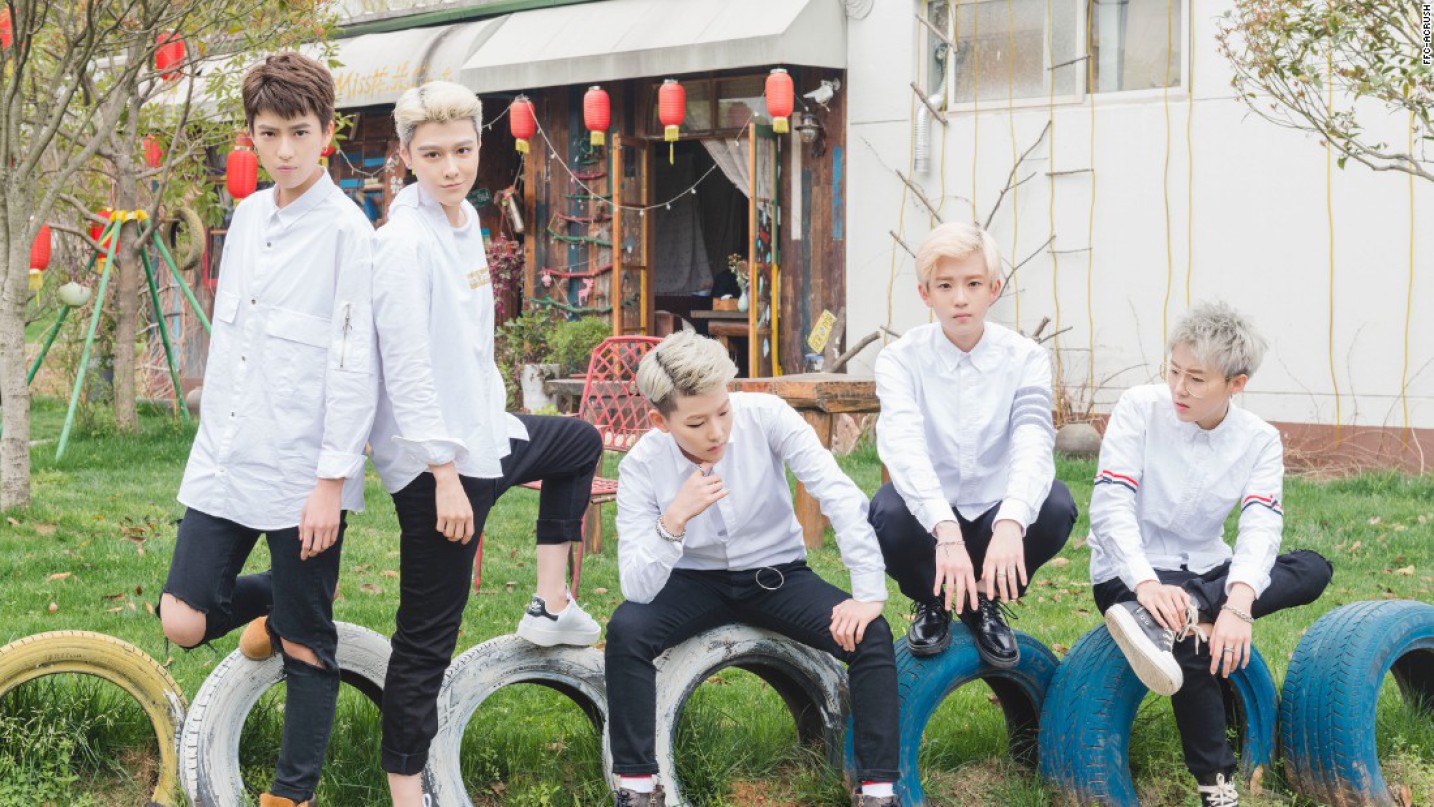
As Hoang pointed out, technologies of embodiment are rapidly evolving and can often quickly respond to evolving standards of beauty. For example, a “boy band” named FFC-Acrush was announced in China in 2017 as China’s answer to K-Pop. The group became a major sensation in China with almost a million fans on Weibo. But the catch is: All of the members are actually girls posing as boys and prefer to be referred to as “mei-shao-nan,” or a gender-free term that translates to “handsome youths” in Chinese. The group’s androgynous style made waves in not only China but also in the West. The mastermind behind the group, Wang Tianhai, stated that the intention of the group is to tap into the unique beauty of gender neutral and to celebrate “a special sense of beauty and a unique sense of handsomeness”. The group’s unique positioning demonstrates their appeal to a new demographic in this generation, in which the image of a female is no longer dictated by “big eyes, small face, long hair, slim figure.” With distinctly gender-segregated groups in K-Pop, perhaps this is China’s rebellious act to push C-Pop to the global stage.

 The Politics of K-Pop
It’s interesting to see how you explored the impact of South Korean beauty standards and culture of plastic surgery in the context of Chinese pop groups! It makes me wonder to what extent Chinese artists feel a need or want to mimic the physical features of South Korean pop idols. As a Korean American myself, it’s been confusing how to differentiate when I want to look “more Korean” or more “American” because of the drastic differences in cosmetic products or trends; do I want to adhere to the “lovely and innocent but also sexy” woman image of South Korea or simply the “thick and badass bitch glam” of America? With Asian men historically being projected as undesirable, how do you think South Korean or East Asian beauty standards affect the way Asian men are received in the U.S.? Do you think that Asian men that adhere more to East Asian beauty standards or those who adhere to American beauty standards are considered more attractive? To flip the perspective, what would the ideal Asian man look like/be like? It’s frustrating that physical appearances are at the forefront of criteria that determines how “worthy” of attention someone is, especially in the context of the fetishization of Asian women.
LikeLike
I really like when you mentioned the boy band group that goes against the idea of having “big eyes, small face, long hair, and slim figure.” I think these ideals of Asian women are very gendered so mentioning the group FFC-Acrush is really important to support a counter to this idea of what beauty is. Their feminine-masculinity that they express among their gender-free group reminds me of a topic I discussed in my Gender And Communication Class. We spent an entire class talking about masculinity and why there is such a toxic aura around it, and then creating in return, toxic masculinity. Going off of this we brought up the question of female masculinity and the importance of realizing that masculinity and being “handsome” as you call the boy band does not have to necessarily be gendered to only men. We asked the question what makes masculinity directly associated towards men when there is a so called “Feminine Man” idea in society? Often times we see many other forms of men such as metrosexual and femine while there is usually no equal for women.
LikeLiked by 1 person