Trigger Warnings: body image, fat shaming, cyberbullying
Winning the title of Miss Korea supposedly indicates that the winner is the “most beautiful woman in Korea.” Yet, the winner of Miss Korea 2018, Soo Min Kim, received major backlash after winning the competition because netizens deemed her to be too fat. In Korea, women over 50 kg or about 110 lbs. are considered “chubby” (Asian Boss). At 5’8’’ and 130 lbs. (58.9kg), Soo Min was shunned by Korean netizens because she was considered overweight and therefore cannot represent Korean beauty. As a result, she had to temporarily quit Instagram because of the overwhelming amount of hate comments that she was receiving. Soo Min’s experience and Korea’s reaction demonstrate the problematic beauty standards that permeate not only the controversial beauty pageant, but also Korea’s society as a whole.
Beauty pageants are problematic and have historically perpetuated sexist ideologies and objectified women’s bodies. Additionally, pageants implicitly create regionally specific beauty standards and send a message of what the archetypal woman should look like. In other words, the winner of a beauty pageant carries the burden of representing what beauty means to a region, and in the case of Soo Min, she failed to live up to that standard according to Korean netizens. In the interview above, Soo Min attributes the cause of Korean’s harsh beauty standards to be social media and the ability to circulate immensely-edited imagery that perpetuates lookism. She also talks about the role that celebrities play in crafting the image of the ideal weight and the ideal body. It’s not hard to find similar issues in the K-Pop industry, where many K-Pop idols are under constant scrutiny by not only their labels and management, but also by the audience that they serve.

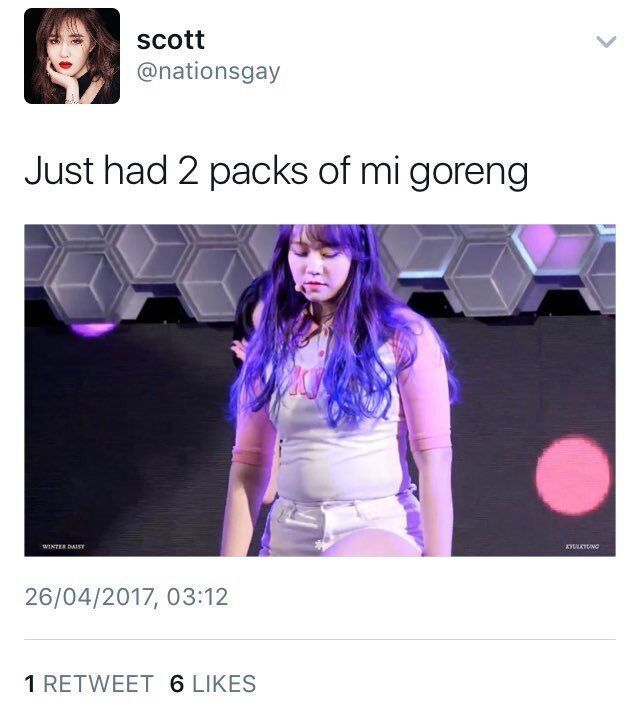
In 2017, a member of a Korean girl group (PRISTIN), 15-year-old Kyla Massie, was intensely fat-shamed by Korean netizens and asked to be removed from the group. Many comments online criticized her for “not taking care of herself,” and demanded that she went on a diet immediately. This expectation for a public figure to self-manage and present their bodies in a way that is “socially acceptable” is ridiculous and illustrates the unspoken responsibilities of K-Pop idols to fit within a prescribed box – a box of limitations that refrain them from being themselves. Furthermore, the prevalence of social media platforms allows for people to voice their opinions anonymously, which adds fuel to the fire as it provides an opportunity for cyberbullying and tarnishing the body image and self-esteem of those in question. On the other hand, there are also “influencers” who feel the need to add to the conversation (*ahem* Edward Avila), which inevitably perpetuates the negative social commentary towards a public target.
The world of K-Pop and K-Culture is not all glitz and glamorous as most people would like to believe. As consumers of these cultural products, there is a need to constantly re-assess the social and cultural influence that media forms can have. It’s easy to point to self-love as a solution, but self-love, as Professor Lee writes in “Beauty Between Empires,” is itself a form of self-governance that is used paradoxically to justify the existence of practices like plastic surgery. Instead of viewing plastic surgery or other forms of body alterations as methods to “heal a psychological complaint,” it’s important for a nation to recognize the extensiveness and the problematic permeation of media forms that contribute to creating imagery of the “perfect appearance”, whether it is the Miss Korea pageant, K-Pop girl groups, or the relentless advertising of plastic surgery throughout the country. The media has the responsibility to shift the paradigm and engage people in conversations that need to happen in order to spark change.
Bonus Read: Exploring Korea’s Skinny Obsession and The Plus-Size Models Fighting Back

 The Politics of K-Pop
Your post about the beauty standards for K-Pop idols (and the general Korean public in general) made me think more about the various ‘K-Pop diets’ out there. These diet plans, often very extreme, starve the idols until they have a flat stomach and ‘attractive body’. The diets, when paired with the extreme dance practice and gym schedules that idols follow, are the most common way that K-pop groups prepare their bodies for their comebacks and album releases.
Some of the most famous and extreme diet plans include:
1. Dasom – Cucumber diet – Dasom lost 22 pounds within 3 weeks with this diet.
2. IU – 1 apple for breakfast, 2 sweet potatoes for lunch, 1 protein drink for dinner. IU lost 9 pounds within 4 days with this diet.
3. Suzy – 1 piece of chicken breast, 1 sweet potato, and 1 cup of low-fat milk for breakfast, 1 vegetable salad with brown rice for lunch, 2 sweet potatoes for dinner. Suzy lost 50 pounds within 3 months with this diet.
These diets are extremely dangerous towards the idols’ health because they often starve them to the point of not even having the minimum amounts of nutrients for the body to function. What’s worse is that because they do produce visible results and thin bodies, young fans believe that they, too, can follow these K-pop diets and find success, not realizing the harm they would be doing to their own bodies. It’s very important for the K-pop industry and Korean society to relax its expectations of K-pop idols and their bodies, not only for the sake of the idols’ health, but also the health of their fans.
LikeLike
While Korea seems to champion plastic surgeries of the nose, eyes, jaw, etc., there does not seem to be much of a presence of surgeries such as liposuction or others meant to decrease weight. It appears that in this area, it has to be more of an “earned” beauty especially if appearing in competitions and media as Soo Min did.
This kind of beauty standard does not go without taking a toll on the mental health of Korean celebrities. There have been several stars that have. Jimin from BTS was said to have stopped eating for a highly restrictive diet to reach his ideal weight for the music video for Blood, Sweat and Tears. This caused the BTS ARMY to start the hashtag #JiminYouArePerfect. And he is not the only one. IU confessed on talk show, “Healing Camp,” that K-Pop beauty standards had taken a huge toll on her, causing her to struggle with bulimia.
As expressed by Soo Min, the perfection that is achievable via filters and other artificial means prompts stars to be held to an unachievable standard of appearance that is overall detrimental to the mental health of the stars. This is one of the several painful dues to be paid when put in the K-Pop limelight. Hopefully, the experiences of stars who have spoken out can begin to start the conversations needed and cause the shift from shaming stars to accepting them and loving them as they are.
LikeLike
I thought the videos you chose were very eye opening, and they really illustrate the power that the media and social media have in perpetuating beauty standards for women that are often unrealistic without body modification. I agree with you that it is the media’s responsibility to change the way they present and talk about women’s bodies, and their glorification of plastic surgery and other forms of body modification, such as makeup or extreme diets. As Professor Lee stated in her article, the onus for this change is often put on the individual. The demographic most impacted by these standards — teen girls and young women — are expected to rebel against the media and large companies perpetuating them. Since the beauty industry is inextricably linked to economic and social power for women, plastic surgery is kind of a double edged sword. While plastic surgery is creating a society with unattainable beauty standards and low self-esteem, refusing to have those procedures has economic and social implications, wherein those who do not participate have access to fewer jobs and lower salaries, and less social power. I think there is a similar conflation of feminism and beauty in the US. I often see tweets about having such sharp eyeliner wings they “cut the patriarchy.” And while beauty is often linked to better jobs here too, these beauty standards are only maintaining the patriarchy not dismantling it. However, I think expecting young women to change this system is unreasonable, when they are the ones who will be disadvantaged most without plastic surgery, since unattractive women are seen as “lazy and as incapable” (Lee 17). I am doubtful that this system will be changed anytime soon though, since plastic surgery is such a huge economic industry.
LikeLike